-
Tel : +86-592-6382791
-
Email : sales@pidmaxwell.com
Tel : +86-592-6382791
Email : sales@pidmaxwell.com


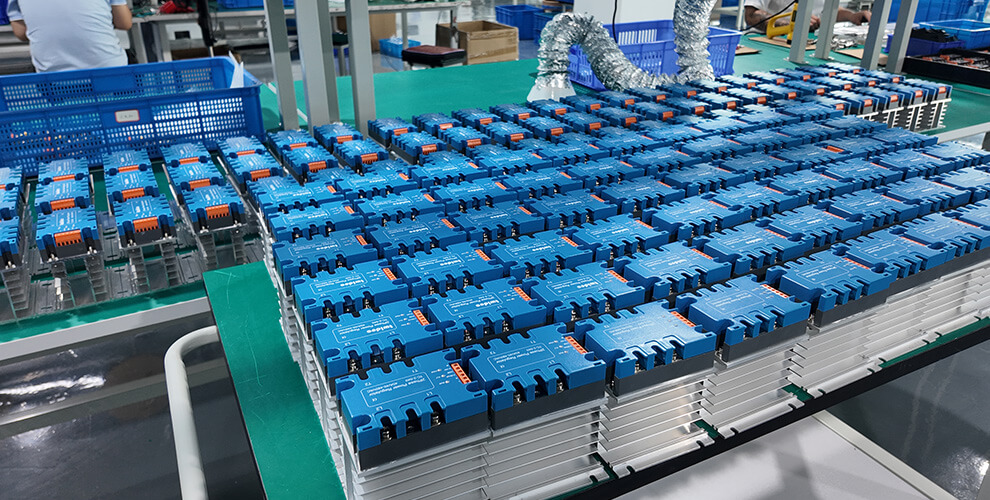
In the field of industrial electric heating, the power regulator is the core component for achieving precise temperature control. Many people have an intuitive understanding of its "temperature stabilization" effect, but may not fully understand its internal functions and operating logic. In short, the power regulator undertakes the crucial task of translating the commands issued by the temperature control system into the actual power required by the heating load.
I. Functional Positioning of the Power Regulator
The fundamental function of the power regulator is to steplessly regulate the output power of the heating load (such as heating elements, resistance wires, infrared lamps, etc.).
During electric heating, power directly determines the heating rate. The power regulator can dynamically adjust the output power based on the analog signals transmitted by the temperature controller or programmable logic controller (PLC). This allows the equipment to obtain the most suitable heating power in different stages, such as start-up heating, approaching the target temperature, and maintaining a constant temperature, thereby optimizing the entire thermal cycle.
II. Fundamental Differences from Conventional Switches
Traditional contactors or mechanical switches only have two states: "on" and "off." This results in the heating process either running at full speed or stopping completely, easily causing temperature fluctuations.
In contrast, power regulators are not simple on/off devices, but linear regulating devices. They can output any power between 0% and 100% according to real-time heat demand. For example, they can output full power during cold starts to shorten waiting time, and gradually reduce power as the set point approaches to prevent overshoot due to thermal inertia, ultimately maintaining thermal equilibrium with minimal power in the constant temperature zone.
III. Rigid Requirements in Industrial Scenarios
Industrial heating equipment typically has high power and is extremely sensitive to the stability of process temperatures. If relying solely on the "on/off" temperature control of contactors, periodic temperature fluctuations are difficult to avoid.
In equipment such as ovens, electric furnaces, metal heat treatment furnaces, and plastic extruders, drastic temperature fluctuations directly affect the drying uniformity, molding accuracy, or metallographic structure of the product. Power regulators, with their smooth power switching characteristics, effectively suppress temperature overshoot and undershoot, providing reliable power control for demanding industrial applications.
IV. Detailed Explanation of Working Principle Power regulators commonly use thyristors (SCRs) as the main control power element. Their core operating mechanism is based on controlling the AC power conduction state:
Chopper Control: By adjusting the thyristor's conduction angle (phase control) or the number of complete power frequency cycles (zero-crossing control), the actual electrical energy received by the load per unit time is changed.
Energy Conversion: More electrical energy input results in higher output power; less electrical energy input results in lower power.
This non-mechanical electronic control method not only has extremely fast response speed and no contact wear, but also accurately maps control signals to the electrical energy supply at the load end.
V. Analysis of Mainstream Control Strategies Currently, the two most widely used control strategies in industry include:
Phase Control (Phase-Shift Trigger) This method cuts the waveform within each half-wave of an AC sine wave by changing the trigger angle. The output changes continuously with high resolution, making it particularly suitable for precision regulation of transformer primary sides or resistive loads.
Zero-crossing control (variable/fixed-cycle power adjustment)
This method switches on and off at the voltage zero-crossing point, adjusting the power by controlling the number of complete cycles of the conduction waveform within a specific time period. Because it operates at zero voltage, it generates minimal radio frequency interference, making it ideal for ordinary resistive heating loads and infrared radiation elements.
VI. Collaborative Process in a Closed-Loop Temperature Control System
In a standardized temperature control system, the components work together to form a closed-loop circuit:
Temperature sensors acquire the actual furnace temperature in real time;
Temperature controllers/PLCs calculate the deviation between the measured and set values and output corresponding analog signals (e.g., 4-20mA or 0-10V);
The power regulator interprets this signal as the corresponding power percentage and drives the load to heat up;
The heated load converts electrical energy into heat to replenish the furnace.
This cycle runs continuously at millisecond speeds, ensuring uniform heating of the workpiece and highly reproducible process temperature curves.
VII. Selection and Field Application Considerations
When selecting a power regulator, the following key parameters must be carefully verified:
Load Power and Voltage: Ensure sufficient margin in the rated current (recommended not less than 20%);
Control Signal Type: Must match the analog signal type output by the host computer;
Load Characteristics: Differentiate between resistive, inductive (transformer), or special infrared loads, as different loads correspond to different triggering modes;
Heat Dissipation Conditions: High-power devices generate significant heat, requiring forced air cooling or heat sinks. Excessive temperature rise will directly lead to limited output or device damage.
Ignoring these details can easily cause field malfunctions such as inaccurate control, frequent alarms, or insufficient heating.
In summary, power regulators play a dual role in industrial heating systems, performing both power conversion and precise regulation. Through precise control of AC power via thyristors, they achieve delicate management of thermal energy, becoming a core hub in modern advanced temperature control systems.

Address : NO.201 Binhuyili, HaiCang district, XiaMen,FuJian, China 361026
Max liao: +8618150368619(whatsapp)
Email : sales@pidmaxwell.com
Scan via wechat

Scan to Whatsapp