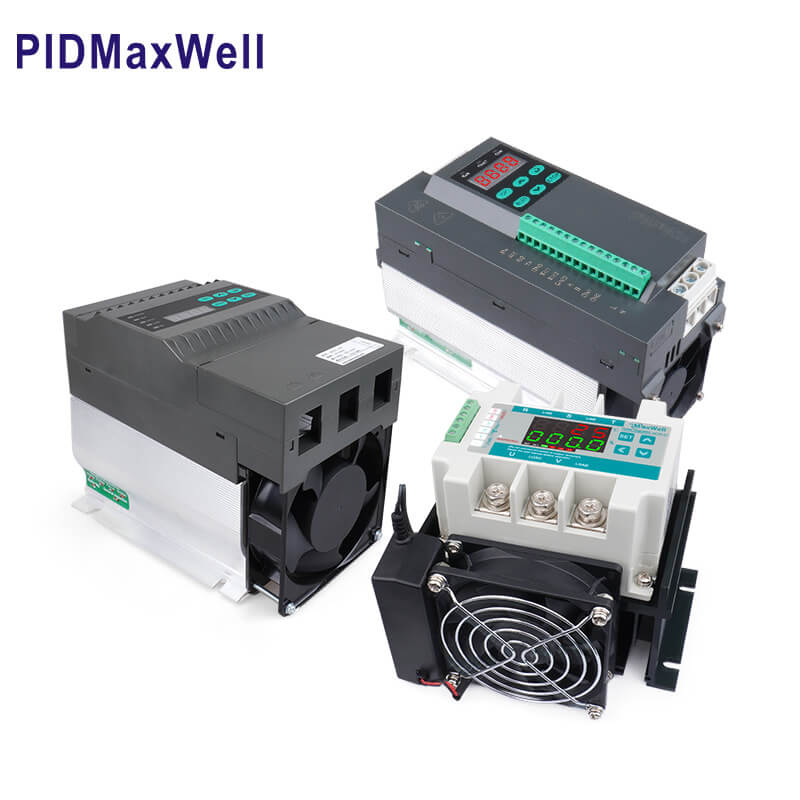
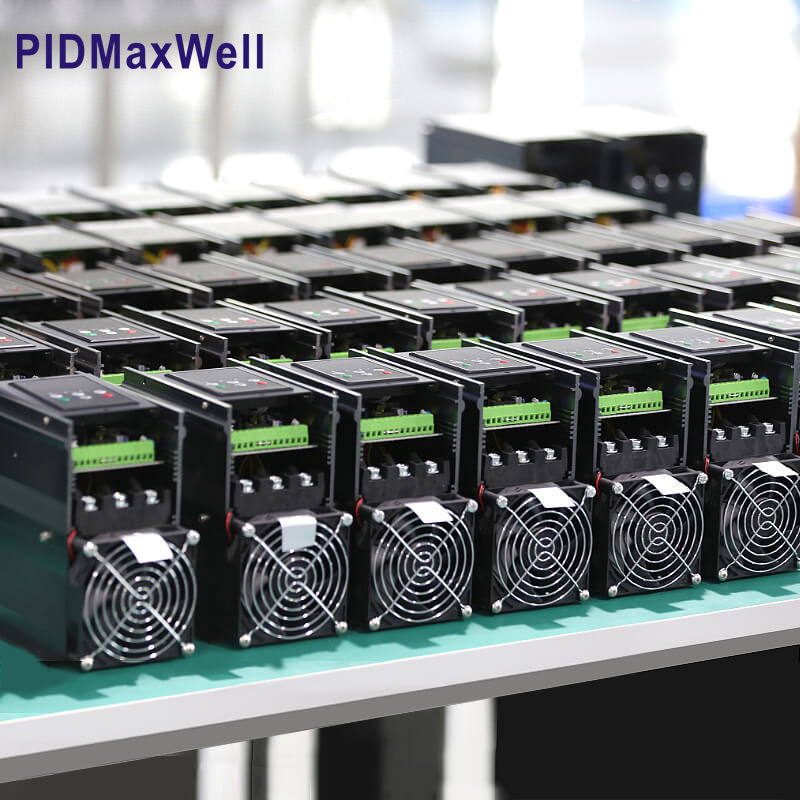
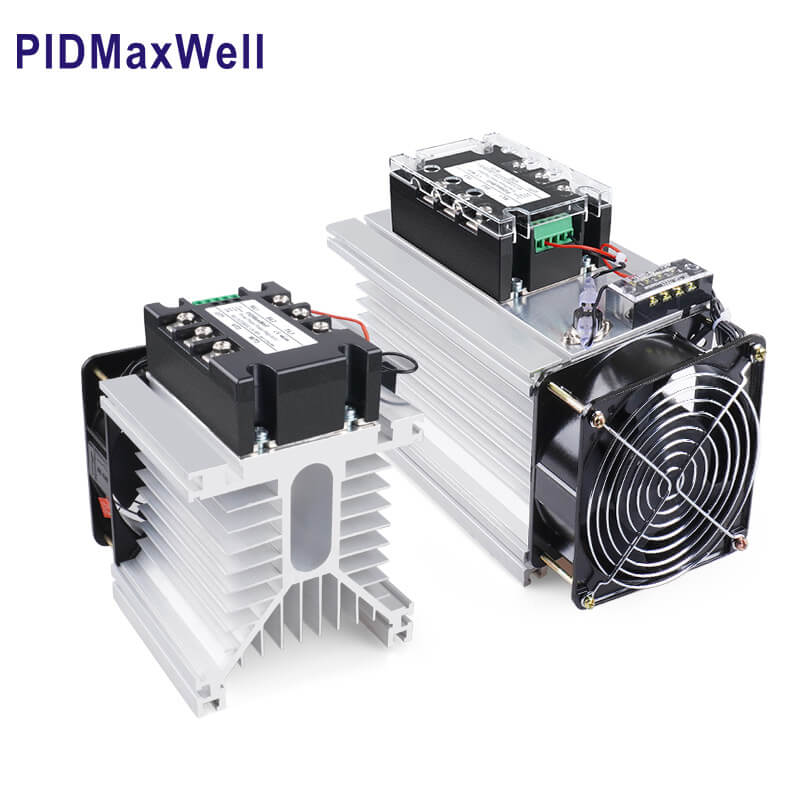
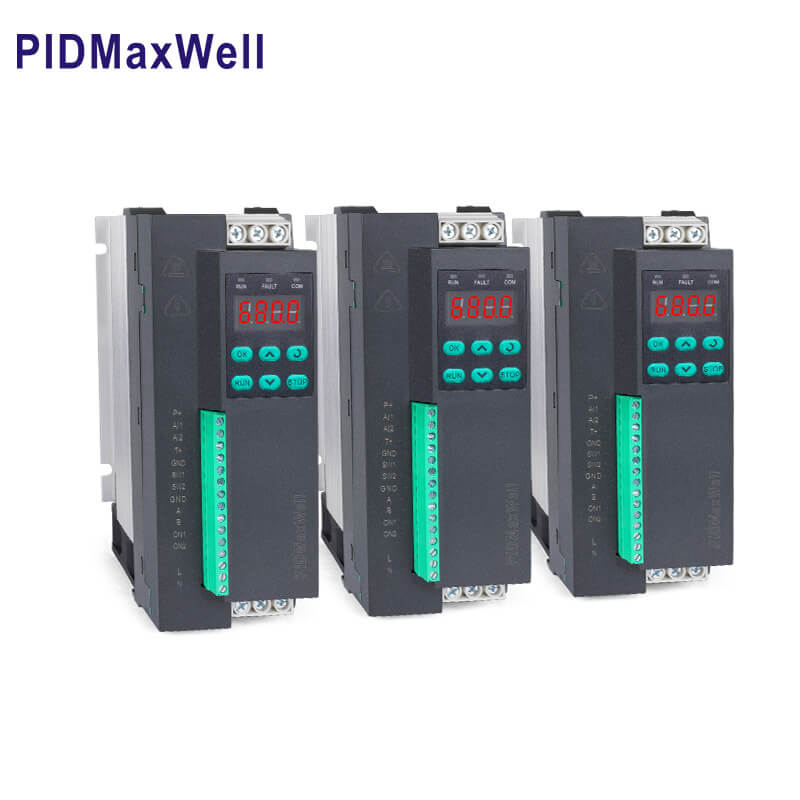
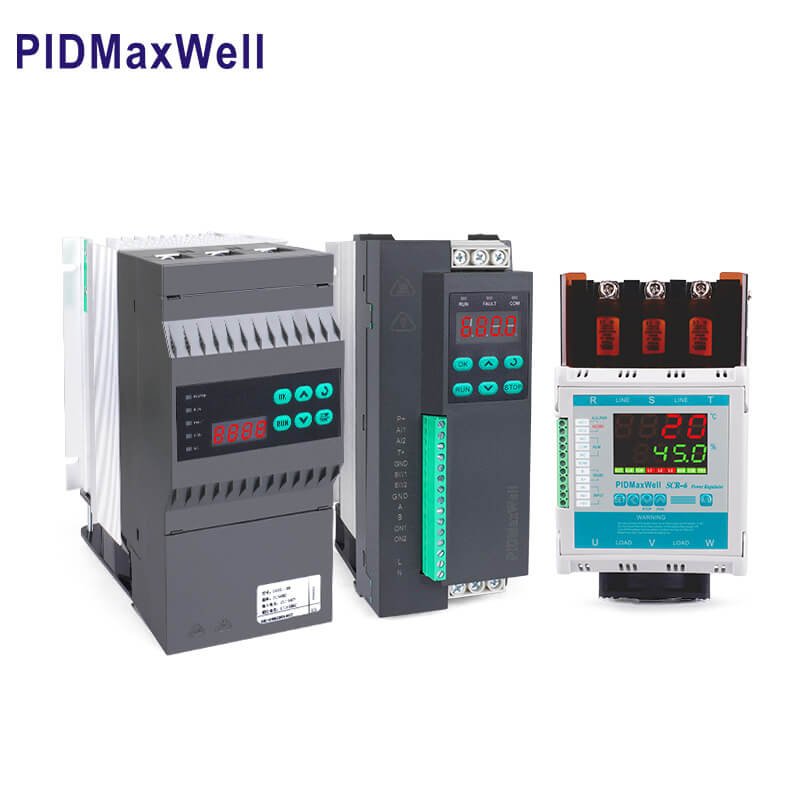
SCR Power Regulator
  • How can the problem of circuit breakers tripping during the startup of electric furnaces or ovens using silicon carbide or molybdenum disilicide heating elements be resolved? Jun 18 , 2026
    In the daily operation of industrial heating equipment, almost every field engineer has encountered this scenario: the moment the start button is pressed, the circuit breaker in the power distribution cabinet trips immediately—the equipment "goes on strike" before it even begins to work. This happens frequently, especially when the equipment is starting from a cold state: the ammeter needle swings violently to the maximum, a dull "hum" might be heard from the contactor, and then everything goes dead. Faced with this predicament, many people’s first reaction is to suspect the circuit breaker is undersized, complain about unstable grid voltage, or blame the power regulator itself. However, seasoned veterans will tell you that the real culprit behind these frequent trips often lies in the massive inrush current that occurs the moment startup begins. To understand this phenomenon, one must look at the physical properties of electric heating elements. Whether it is common resist...
  • Why can't we just look at the kilowatt rating when selecting a three-phase power regulator? Jun 18 , 2026
    When selecting a three-phase power regulator, many customers focus first on total power—asking, "What size do I need?" based on the equipment's actual load wattage. While this approach isn't wrong, power rating alone isn't enough; we also need to consider voltage, current per phase, load type, the temperature controller's output signal, and the electrical cabinet's heat dissipation conditions. First, distinguish between single-phase and three-phase systems. Use a single-phase power regulator for 220V single-phase heating elements, but for 380V three-phase heating equipment—such as ovens, electric furnaces, heat treatment furnaces, or drying equipment—we must use a three-phase power regulator. Even if the total power is low, if the load is wired in a three-phase configuration, we cannot simply choose a single-phase unit for convenience; you must calculate the current based on three-phase requirements. The key factor is the current per phase. For instance, with a 380V, ...
  • Wait function for ramp and soak controller
    Wait function for ramp and soak controller Dec 17 , 2025
    Ramp and soak controller are heavily used in Kiln industry for various application such as Heat Treatment industrial,Ceramics and Sintering industrial,Glass Manufacturing and Tempering,Chemical and Pharmaceutical Reactors,Semiconductor and Electronics Manufacturing, food processing etc. a perfect controlled ramp up and soak segments is crucial for these process. the process always starts out from ambinent temperature let's say 25 degree, for example , if you have a process like below:From Ambient temperature to set point 200 degree within 20 minutesAnd after temperature reach to 200 degree, the temperature will be held at 200 degree for 60 minutesIn field application, the tempeature can be somewhere high or low than 200 degree when 20 minutes elapsed. when this happens, the controller should not proceed to the soak segment cause the process value is way off the target value 200 degree, to solve this problem , our controller has a Wait function,  the temperature will go up fro...
  • What is a Head-Mount Temperature Transmitter? key advantages and why you should use one
    What is a Head-Mount Temperature Transmitter? key advantages and why you should use one Nov 10 , 2025
    Head-mount temperature transmitter is a device installed directly in the connection head of a temperature sensors, temperature sensor typically will be thermocouple or RTDs, the key feature of temperature transmitter is to convert small and raw signal from the sensor into analog signal like 4-20mA, the transmitter has various options such as isolated type,  Hart version,  Modbus RS-485 compatible version, below is an image on how it looks like and the way it is installed inside the connection head In many applications, the master device which receive the temperature signal often located at central control room or far away from the filed where the sensor installed, if the extension cable had been used, the signal will be affected by electrial noise and signal will suffer significant attenuation over long cable runs, therefore , by converting the weak signal into 4-20mA or other digital signal will minimizes the negative effects and saves cost too. as the extension cable is muc...
  • How to choose proper SCR power regulator according to your application ?
    How to choose proper SCR power regulator according to your application ? Jul 02 , 2025
    How to choose proper SCR power regulator according to your application ? SCR power regulator is heavily used in industrial application particularly heating application, to choose proper SCR, several key factors needs to be take into consideration.  1)first thing first, figure out your source whether it is single phase or three phase, the single phase SCR is for single phase source, 3 phase SCR is for 3 phase source, like 3 phase 4 wires, 3 phase 3 wires etc. if the load is single phase, the process is quite simple, make sure you select a SCR with the current rating 2 times higher of the actual load. for example, if you have a heater with 20 amps and 240Vac load, the proper SCR would be 40 amps and 240~480Vac load2)PIDMaxwell SCR power regulator only works for resistive load, make sure your load is resistive load like a heater, electric heater, infrared heater etc3)Identify your source, the source would be 3 phase 380V 4 wires source, like in China, or 3 phase 4 wire 400V in german...
  • What is a ramp and soak PID controller and what features should a good ramp and soak controller have?
    What is a ramp and soak PID controller and what features should a good ramp and soak controller have? Mar 05 , 2025
    ARAMP and Soak PID Controller is a specialized feedback control system designed to manage processes that require gradual changes (ramps) in a setpoint followed by stabilization periods (soaking). Unlike standard PID controllers that maintain a fixed setpoint, this controller dynamically adjusts the setpoint according to a predefined profile, ensuring smooth transitions between phases. Common in industries such as thermal processing, chemical manufacturing, and ceramics, it prevents system stress and improves process stability. Our MPU90 Series ramp and soak controller is a perfect choice. It has 0–25% FS accuracy and comes with PC software that records process values, setup values, and alarm events.   Key Features of a Good Ramp and Soak PID Controller: Accurate Setpoint Tracking: Accurately follows programmed ramp rates and soak durations, minimizing deviations even during dynamic changes. Smooth Transitions:Seamless changes between ramp and soak phases without abrupt outpu...
  • What is HART 7?
    What is HART 7? Mar 23 , 2024
    HART 7 is more than just a wireless protocol, our HART protocol temperature transmtiter TT-217 is HART 7 product, you can configure it by using our PC software or you can configure it by using standard HART communicator, the HART 7 standard applies to the full range of measurement, control, and automation systems products based on the HART Communication Protocol – whether wired or wireless. The WirelessHART capability is getting the most attention, but HART 7 provides many new capabilities beneficial to industry users in both wired and wireless products. Examples include: 1) Report by Exception—enables devices to push information to the control or asset management system without the system having to poll the device with a standard HART command. If there is a process or device status change, the device will automatically advise you.2) Time-Stamped Data—a valuable tool that adds a time stamp to process data readings sent to the host system which is helpful in evaluating...
  • How do you convert an old kiln into a 21st century kiln Dec 26 , 2023
    Converting an old kiln into a more modern and efficient version involves several steps, depending on the specific features and condition of the existing kiln. Here is a general guide to help you get started: Assessment: Examine the current condition of the kiln, including its structure, insulation, heating elements, and control systems. Insulation Upgrade: Improve insulation to enhance energy efficiency. Modern insulating materials can help maintain consistent temperatures and reduce heat loss. Temperature Control: Upgrade the temperature control system to a more precise and programmable one. such as our MF43HYC  kiln controller, This may involve installing new thermocouples, and other modern temperature regulation equipment. Heating Elements: Check and replace outdated heating elements with more efficient ones. Consider using advanced materials for heating elements to achieve better performance and durability. Automation and Programmability: Integrate automation systems to contro...
  • The Ultimate Guide to Pottery Oven Controllers Dec 26 , 2023
    Elevate Your Craft with Advanced Pottery Kiln Control Systems Introduction: In the intricate world of pottery, achieving perfection requires not just skillful hands but also precise control over the firing process. Enter the pottery oven controller – the unsung hero behind the scenes, ensuring that every piece of art emerges from the kiln in all its glory. In this guide, we'll delve into the importance of pottery oven controllers, their key features, and how investing in the right controller can elevate your pottery to new heights. Understanding Pottery Oven Controllers:Pottery oven controllers are the brains behind the firing process, regulating temperature, humidity, and other critical factors. Whether you're a seasoned artisan or a budding enthusiast, the right controller can make a significant difference in the outcome of your creations.Key Features to Look For:   Temperature Precision:Explore controllers with precise temperature regulation capabilities, ensuring that yo...
  • A Deep Dive into Kiln Controllers Dec 26 , 2023
    A Deep Dive into Kiln Controllers Introduction We are a PID temperature controller supplier in China, one of our kiln controller rolled out early of 2023 is very popular on the market and we are the first factory to introduce this kind of controller in China. Today we are going to dig deep into kiln controllers and beyond In the world of ceramics, pottery, and even certain industrial processes, the kiln plays a pivotal role in transforming raw materials into beautifully crafted and durable products. The key to achieving consistent and precise results lies in the heart of the kiln – its controller. In this blog, we'll explore the significance of kiln controllers, their functionalities, and how they contribute to achieving the perfect firing process. Understanding Kiln Controllers   A kiln controller is essentially the brain of the kiln. It is a sophisticated device designed to regulate the temperature, humidity, and other crucial factors during the firing process. Whether you...
1 2

Leave A Message

Leave A Message
If you are interested in our products and want to know more details,please leave a message here,we will reply you as soon as we can.

Home

Products

contact

whatsapp