-
Tel : +86-592-6382791
-
Email : sales@pidmaxwell.com
Tel : +86-592-6382791
Email : sales@pidmaxwell.com


As an end-user, my biggest concern when purchasing a power regulator isn't a slightly higher price, but rather issues that arise after installation—such as unstable temperatures, recurring malfunctions, and maintenance headaches. I eventually realized that selecting the right model requires looking beyond just current, power, and price; one must understand a more fundamental factor: exactly which power regulation method is best suited for the specific heating equipment.
Different heating loads have distinct "temperaments." While standard electric heating tubes and resistance wires are relatively straightforward, loads such as infrared lamps, silicon carbide rods, molybdenum disilicide (MoSi2) rods, and transformers can be far more sensitive to variations in voltage, current, and waveform, as well as to the differences between cold and hot states. A mismatch between the control method and the load often leads to problems on-site—such as slow heating, temperature fluctuations, abnormal output, and excessive interference—or even a shortened lifespan for the heating elements. Therefore, from an end-user's perspective, I make it a priority to understand the common control strategies before confirming the details with the supplier.

The first method is zero-crossing control (or zero-crossing switching).
This method involves switching the power on or off when the AC voltage is near the zero-crossing point. It operates using complete cycles as the unit of control, adjusting the average output by varying the ratio of "on" time to "off" time over a specific period. You can think of it as "rapid switching": rather than chopping up individual waveforms, it controls power in discrete cycle-based blocks. This approach places relatively little stress on the power grid and generates minimal interference, making it common in standard resistive heating applications—such as electric heating elements, resistance wires, ovens, electric furnaces, and hot-air equipment. For many users, this type of control is sufficient to maintain stable temperatures.
The second method is phase-angle control (or phase-shifting control).
This method adjusts the conduction angle within each half-cycle of the AC waveform. A larger conduction angle results in higher output, while a smaller angle yields lower output. Its advantage lies in providing smoother, more precise output adjustments, making it ideal for processes requiring high power-regulation accuracy. However, the trade-off is that chopping the waveform can introduce harmonics, imposing specific requirements on the electrical environment, surrounding equipment, and wiring. Therefore, it is a strong candidate if the process genuinely demands continuous, fine-grained adjustment; for standard resistive heating, however, phase-angle control may not be strictly necessary.
The third method is voltage regulation.
Voltage regulation focuses on varying the output voltage, thereby indirectly influencing the heating power. Certain specialized loads are highly sensitive to voltage, making voltage-based control a more suitable choice. In practice, voltage regulation is often implemented in conjunction with phase-angle control. As a user, I would specifically clarify a few points: Can my load withstand continuous voltage regulation over the long term? Is there a significant difference between its cold and hot resistance? One cannot simply apply experience gained with standard electric heating elements to specialized loads.

The fourth approach involves regulating average power.
Power regulation control focuses primarily on the ratio of average power delivered over a specific period. Zero-crossing control is a common method of this type. Instead of continuously altering every individual waveform, it adjusts the ratio of "on" time to "off" time to deliver the required average power to the load. For many resistive heating applications, this method offers a good balance between stability and grid compatibility, making it a popular choice.
So, how should one make a selection in practice? My approach involves three steps: first, consider the load type; second, look at process requirements; and finally, assess on-site conditions. For standard electric heating tubes or resistance wires, zero-crossing power regulation is usually the preferred starting point. If the process demands continuous, fine-grained output adjustments, phase-angle control should be evaluated based on the specific application. However, for loads such as infrared lamps, silicon carbide rods, molybdenum disilicide (MoSi2) elements, or transformers, a "one-size-fits-all" approach won't work; the choice must be tailored to the load characteristics and the specific heating process. No single control method is suitable for every type of equipment.
Choosing the wrong control method has immediate consequences. Minor issues include temperature fluctuations, slow heating, and unstable output; more serious problems include increased electrical interference, shortened heating element lifespan, and even compromised product consistency across the entire production line. For instance, a load requiring continuous voltage regulation might fail to achieve the desired heating effect if an unsuitable control method is used; conversely, an inappropriate control method for a standard resistive load can introduce unnecessary electrical interference.
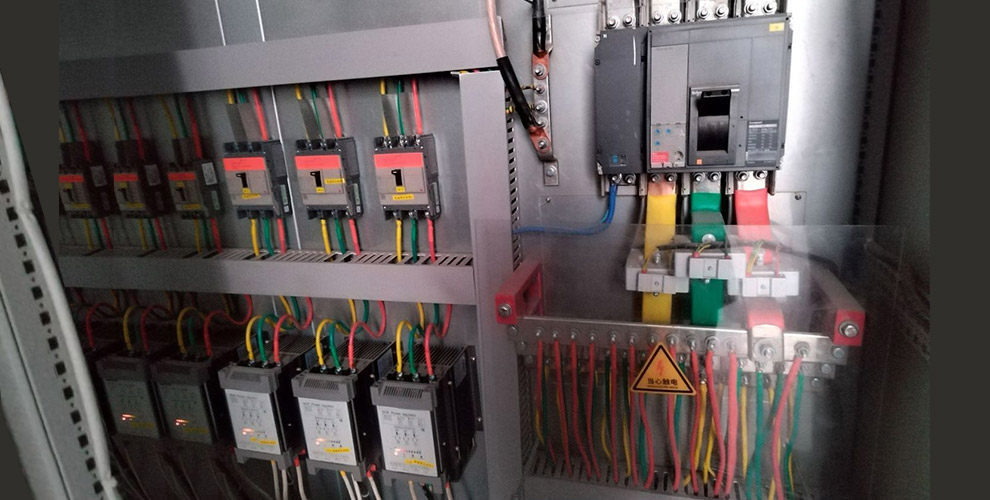
Beyond the control method, I also consider the power supply configuration, rated current, load power, control signals, installation environment, and heat dissipation conditions. Power regulators generate heat during prolonged operation; if heat dissipation within the cabinet is inadequate, issues such as overheating alarms or unstable output can arise, even if the control method was selected correctly. As an end-user, I do not want equipment that looks impressive on paper but proves difficult to use in the field; I prefer suppliers who clarify the load and process requirements before proposing a matching solution.
When selecting power regulators, PIDMaxWell also emphasizes confirming load characteristics before matching the control method, rather than simply comparing prices and model numbers. For the user, the truly prudent approach is to present all relevant factors—load type, process curves, grid conditions, control signals, and heat dissipation—to ensure the selection is well-founded. By prioritizing the load and specific requirements before finalizing the control method, the heating equipment will operate more stably and reliably, requiring less maintenance and worry.

Address : NO.201 Binhuyili, HaiCang district, XiaMen,FuJian, China 361026
Max liao: +8618150368619(whatsapp)
Email : sales@pidmaxwell.com
Scan via wechat

Scan to Whatsapp