-
Tel : +86-592-6382791
-
Email : sales@pidmaxwell.com
Tel : +86-592-6382791
Email : sales@pidmaxwell.com


In industrial electric heating systems, a power regulator is typically installed between the temperature controller (or PLC) and the heater. It does not generate heat itself, nor does it measure temperature; instead, it receives control signals and adjusts the actual voltage, current, or power delivered to the heating load. Many people wonder: just how useful is it? Is it mandatory for every heating application? There is no one-size-fits-all answer; it depends on factors such as equipment power, temperature control precision, load characteristics, and process requirements.
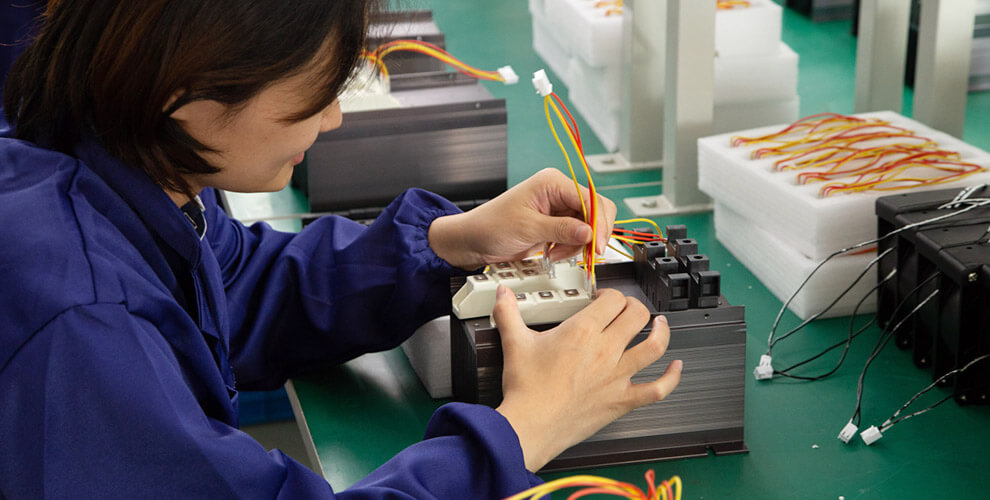
For a low-power warming cabinet requiring only simple on/off switching—where a temperature variance of a few degrees is acceptable and switching frequency is low—relays, contactors, or even solid-state relays suffice for control. In such cases, adding a power regulator would merely increase costs and system complexity without offering significant benefits. Conversely, for equipment involving high-power heating, continuous production, multiple temperature zones, programmed temperature ramping, or strict temperature stability requirements, the power regulator often serves as a critical control component.
Its value lies primarily in its ability to provide finer temperature control. Standard on/off control operates only between full power and zero power; equipment with high thermal inertia is prone to temperature overshoot and tends to oscillate around the setpoint. Power regulators, however, can incrementally adjust output based on control signals—working in tandem with the continuous modulation of the temperature controller—to minimize overshoot and fluctuations. This advantage is particularly evident during the holding phase for loads with significant thermal inertia, such as ovens and furnace chambers.
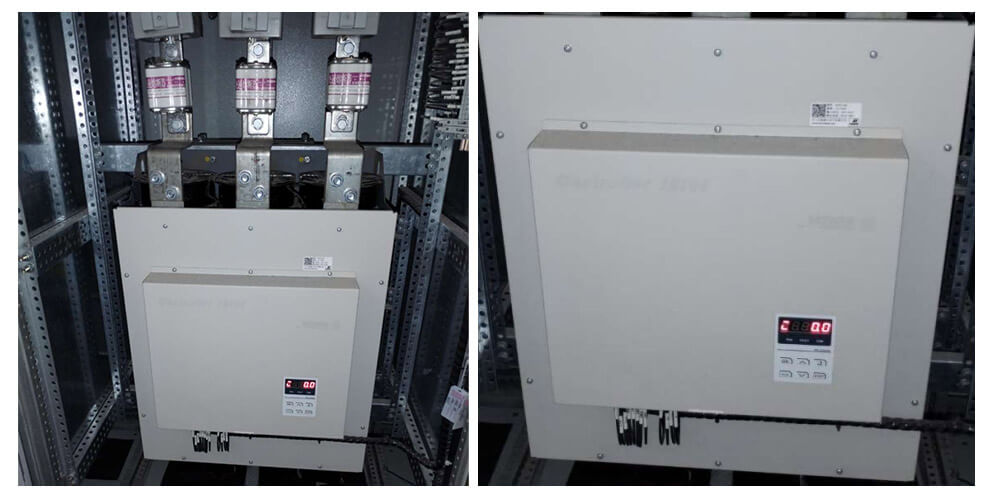
Secondly, it enables precise adherence to process profiles. Processes such as ceramic sintering, metal heat treatment, glass processing, and material drying often prohibit rapid temperature ramping. A programmable temperature controller or PLC issues stage-specific signals, and the power regulator executes the corresponding power output for each phase—ensuring that heating, holding, and cooling stages closely follow the required process curve, rather than relying on the abrupt "full-on/full-off" switching of a contactor.
Thirdly, it minimizes the frequent operation of mechanical contacts. Contactors rely on the engagement and disengagement of contacts; excessive cycling leads to contact erosion, increased noise, and a shortened service life. In contrast, power regulators typically utilize power semiconductors for regulation; they involve no frequent mechanical movement, making them ideal for continuous power modulation and high-frequency control. Of course, contactors still serve vital roles in main power isolation, safety interlocking, and fault protection; the installation of a power regulator does not eliminate the need for these other protective measures.
Fourthly, some models offer features such as soft start, current limiting, and constant current control. Heating elements with low cold resistance can draw high inrush currents upon startup, and soft-start functionality mitigates this surge; current limiting actively reduces output if the current exceeds set limits. However, not all models include these features; one must verify the specifications during selection rather than assuming their presence.
Finally, it can be integrated into automation systems. Supporting common control signals—such as analog, pulse, or digital communication—it works in tandem with temperature controllers, PLCs, and supervisory computers to automatically adjust power based on temperature, production volume, or material specifications. It delivers process-compliant output during normal production, reduces power during standby, and restores full power when new material is introduced.
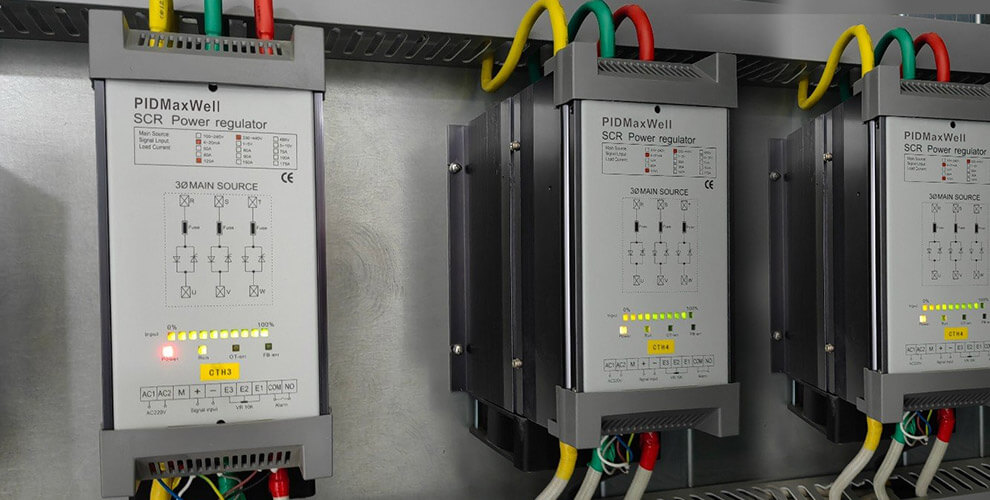
Which equipment is suitable? Industrial ovens, tunnel furnaces, resistance furnaces, heat treatment furnaces, injection molding extruders, packaging heat sealing equipment, glass and ceramic kilns, semiconductor heating platforms, food and pharmaceutical drying and sterilization equipment, etc., are worth considering as long as there are requirements for temperature stability, heating curves, or high-power regulation. Simple, low-power equipment, fixed-power operation, and applications with less stringent temperature requirements may not be suitable.
Before selecting a model, first confirm whether it is single-phase or three-phase, voltage, power, and maximum current, then confirm the load type: heating elements, heating wires, infrared lamps, transformers, silicon carbide rods, and silicon molybdenum rods have different characteristics, so don't just look at the total power. Also determine the control method, heat dissipation conditions, and whether soft start, current limiting, constant voltage, constant current, constant power, and communication are needed. From the user's perspective, clarifying the process and budget before deciding whether to install and which type is more prudent than blindly following trends. If the on-site conditions are complex, manufacturers like PIDMaxWell, which make power regulators, can be used for technical exchange to clarify requirements before selection.

Address : NO.201 Binhuyili, HaiCang district, XiaMen,FuJian, China 361026
Max liao: +8618150368619(whatsapp)
Email : sales@pidmaxwell.com
Scan via wechat

Scan to Whatsapp