-
Tel : +86-592-6382791
-
Email : sales@pidmaxwell.com
Tel : +86-592-6382791
Email : sales@pidmaxwell.com


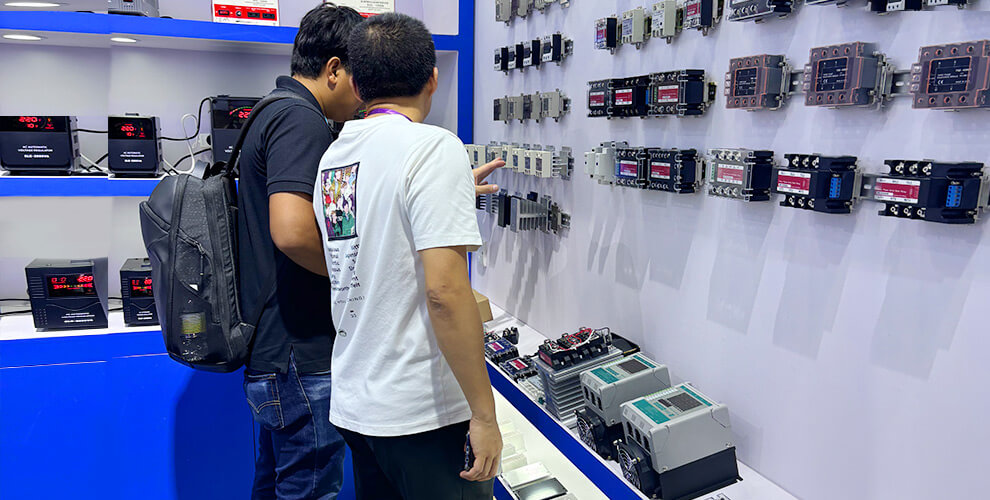
In the field of industrial electric heating, many people habitually refer to power controllers simply as "power regulators," assuming their sole function is to adjust power levels. While not incorrect, this view is far from complete. The role a power controller plays in an industrial heating system extends well beyond mere power regulation.
I. Power regulation is the foundation, but not the whole story.
Regulating power is indeed the most fundamental function of a power controller. By controlling the conduction of thyristors (SCRs), it alters the average power delivered to the heating load. High power output leads to rapid heating, while low output results in slower heating—this is the starting point of a power controller's involvement in industrial heating control.
However, dismissing a power controller as merely a "power regulator" is like calling a car nothing more than a "means of transport"; it overlooks the capabilities that truly make it valuable.
II. Ensuring stable temperatures—no more wild fluctuations.
For many systems utilizing power controllers, the primary objective isn't just the ability to adjust power, but the ability to maintain a stable temperature.
If a system relies solely on contactors for on/off control, temperature fluctuations are inevitable: power cuts off when the set temperature is reached and reconnects when the temperature drops. This "all-or-nothing" approach inherently leads to temperature overshoot and droop. In contrast, a power controller can gradually reduce output power as the temperature approaches the set point and maintain precise output during the steady-state phase, thereby minimizing overshoot and fluctuation. For processes requiring high temperature precision, this capability for smooth, continuous adjustment is far more valuable than simple power switching.
III. No mechanical contacts—ideal for frequent adjustments.
Contactors rely on the engagement and disengagement of mechanical contacts to control the circuit. Frequent operation makes these contacts prone to wear, sticking, and even noise or sparking, all of which compromise equipment reliability.
Power controllers employ a contact-free thyristor control method; there is no mechanical engagement, and thus no issue with contact wear. For industrial heating equipment requiring frequent power adjustments and long periods of continuous operation, this contact-free nature serves as a guarantee of reliability. IV. Reducing Start-Stop Shock to Protect Power Supplies and Equipment
Frequent full-power engagement and disconnection of high-power heating equipment can subject the power supply system and electrical components to significant stress. Sudden inrushes of high current can cause voltage fluctuations, potentially disrupting the normal operation of other equipment on the same grid.
Power controllers enable smoother power output; through soft-start and soft-stop functions, they gradually ramp power up or down, mitigating the impact of abrupt full-power switching. In applications such as high-power electric furnaces, ovens, and hot-air systems, this buffering effect is crucial for protecting equipment and maintaining grid stability.
V. Early Detection of Abnormalities to Aid Troubleshooting
Many power controllers feature protective alerts, such as overheating alarms, overcurrent protection, phase-loss detection, and load anomaly warnings.
When equipment malfunctions, these alerts help on-site personnel quickly pinpoint the source of the problem. While alarm signals serve as indicators rather than definitive diagnoses—requiring further investigation into power conditions, load characteristics, wiring quality, and heat dissipation—they significantly improve troubleshooting efficiency compared to having no clues at all.
VI. Converting Control Signals into Actual Power
The power controller acts as the "execution bridge" between the control system and the heating load. Control signals from temperature controllers, PLCs, or manual adjustment devices—such as 4–20 mA current signals, 0–10 V voltage signals, or pulse signals—are low-power signals incapable of directly driving high-power heating loads.
Power controllers receive these signals and convert them into corresponding high-power outputs, enabling the control system to effectively command the heating equipment. Notably, the 4–20 mA current signal offers superior interference resistance, making it advantageous for long-distance transmission and complex industrial environments.
VII. Adapting to Diverse Heating Processes and Scenarios
Different industrial heating applications have varying requirements for power control. Some equipment demands rapid heating, while others require precise, long-term constant temperature maintenance, minimized temperature overshoot, or independent multi-zone temperature control.
Power controllers can employ different methods—such as phase-angle control (continuous voltage regulation) or zero-crossing control (power regulation)—to tailor the heating process to specific production requirements. When paired with a PID controller or PLC, these devices can execute complex temperature control profiles—a level of flexibility that simple power regulation cannot match.
VIII. Proper Selection Is Key to Performance
No matter how many functions a power regulator offers, its effectiveness depends on correct selection and application.
Several key factors must be verified during selection: whether the load power falls within the device's rated range, whether the control signal type matches (e.g., 4–20 mA vs. 0–10 V), and whether heat dissipation is adequate (ventilation, heat sinks, cooling fans, etc.). If issues arise in these areas, even a high-quality power regulator may trigger alarms, produce abnormal outputs, or result in temperature instability.
From power regulation to temperature stabilization, from contactless control to surge suppression, and from fault alerts to signal conversion and process adaptability—the role power regulators play in industrial heating systems extends far beyond the simple label of "power regulator." A proper understanding of these functions enables sound judgment during selection and on-site application, ensuring more stable and efficient equipment operation.

Address : NO.201 Binhuyili, HaiCang district, XiaMen,FuJian, China 361026
Max liao: +8618150368619(whatsapp)
Email : sales@pidmaxwell.com
Scan via wechat

Scan to Whatsapp