-
Tel : +86-592-6382791
-
Email : sales@pidmaxwell.com
Tel : +86-592-6382791
Email : sales@pidmaxwell.com


In modern intelligent manufacturing systems, power regulators are gradually becoming core actuators in power management. Whether in precision temperature control systems or high-power drive units, power regulators, with their flexible power adjustment capabilities, bring significant performance leaps to equipment. So, how do power regulators achieve dynamic power output matching in milliseconds? And why are they called the "invisible driving force of industrial energy saving"? This article will systematically dissect the technical architecture and practical value of power regulators from underlying logic to application scenarios.
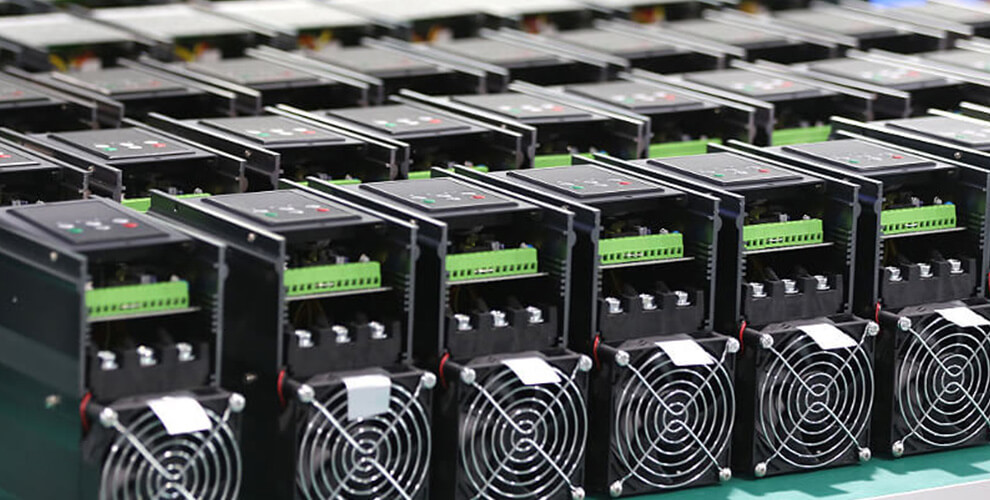
Re-understanding Power Regulators
Essentially, a power regulator is a solid-state power regulation device. It does not rely on mechanical contacts but uses semiconductor switching devices to achieve effective control of the voltage and current at the load end. From resistance heating furnaces to AC motor soft starts, power regulators can adjust the amount of electrical energy transmitted to the load in real time based on the deviation between the set value and the feedback value, thus ensuring that the output power always matches the process requirements.
Three Core Control Logics of Power Regulators
The working mechanism of power regulators can be summarized into the following three mainstream modes, each corresponding to different load characteristics and electromagnetic compatibility requirements:
Phase-Shift Triggered Control
This is the most classic operating mode of power regulators. By delaying the thyristor's turn-on moment within each half-wave of the AC voltage (i.e., changing the firing angle), the power regulator can continuously cut the sine wave, allowing the load to obtain a smooth voltage from near zero to full. In this mode, the power regulator responds extremely quickly, suitable for scenarios requiring rapid temperature stabilization or soft starting, but it introduces certain harmonics, requiring filtering measures.
Zero-Crossing Triggered Control
To reduce pollution to the power grid, power regulators often adopt a zero-crossing trigger strategy, performing the turn-on or turn-off action only at the instant the AC current naturally crosses zero. At this time, the power regulator outputs a series of complete sine wave cycles without phase cutoff, thus significantly reducing electromagnetic interference. This power regulator operating mode is particularly suitable for electrothermal loads with high thermal inertia, balancing control accuracy and grid friendliness.
Frequency Control (Pulse Width Modulation On/Off)
For applications requiring extremely low switching losses, the power regulator can be set to a fixed time period, within which the on-time and off-time cycles are proportionally allocated. For example, within 50 power frequency cycles, the power regulator operates the load for 30 cycles and stops for 20 cycles, achieving an equivalent power of 60% of the rated value. In this mode, the power regulator's switching frequency is extremely low, with almost zero harmonics, making it ideal for high-power industrial furnaces and kilns.

Address : NO.201 Binhuyili, HaiCang district, XiaMen,FuJian, China 361026
Max liao: +8618150368619(whatsapp)
Email : sales@pidmaxwell.com
Scan via wechat

Scan to Whatsapp