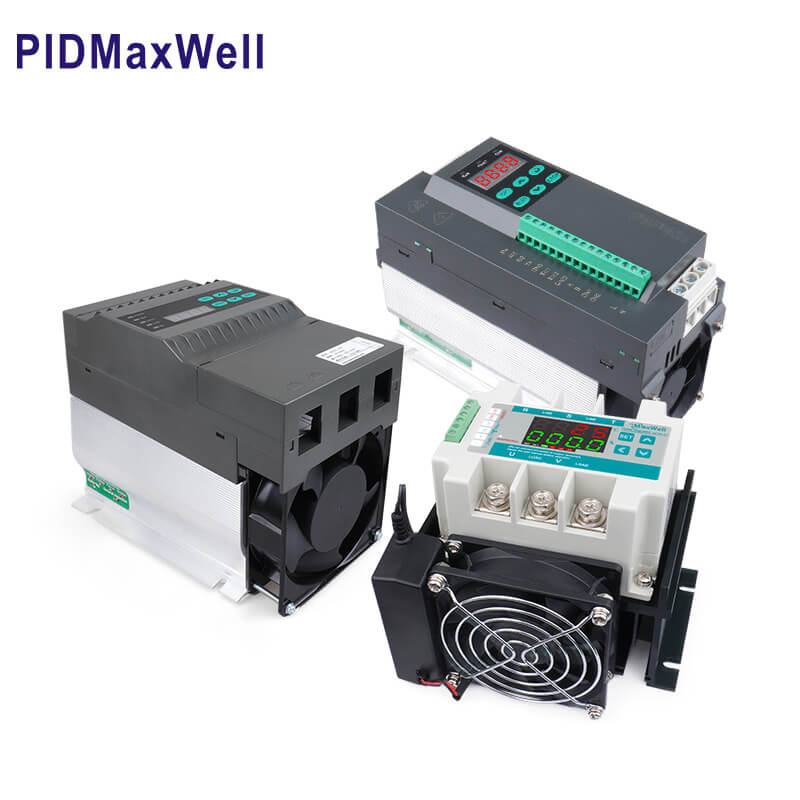
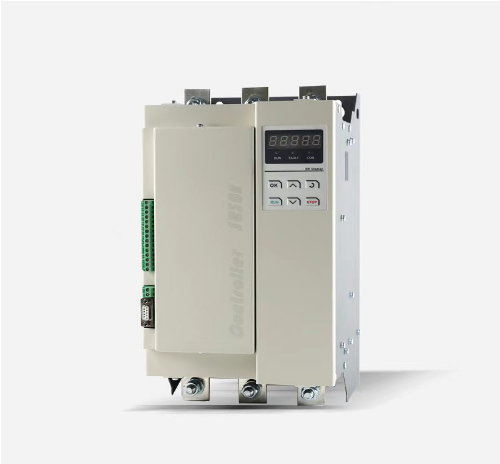
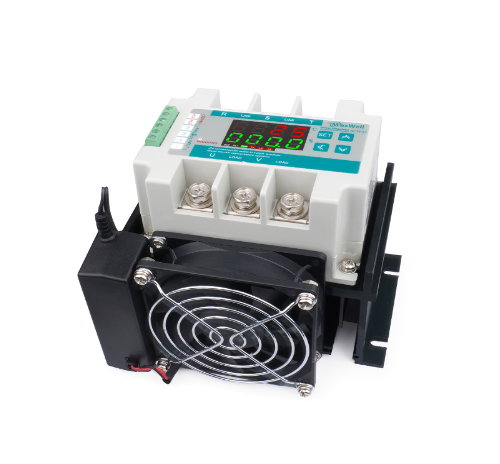
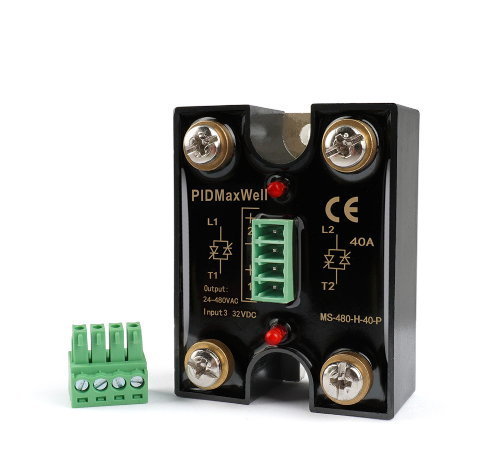
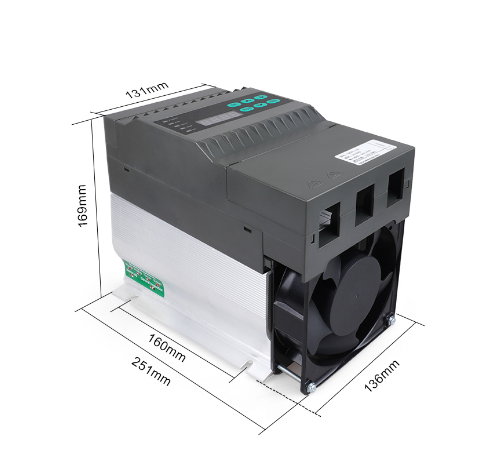
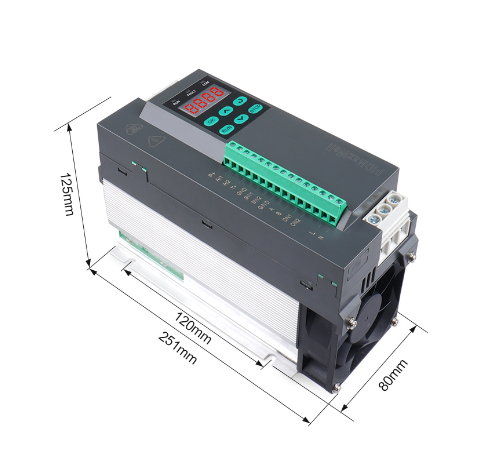
Many people have the same question when they encounter power regulators: Can this thing be used to directly control temperature? At first glance, it seems logical, since power regulators regulate power, and changes in power will naturally change the temperature. But if you look closely, the answer is actually quite clear—it doesn't inherently have the ability to "control temperature." What truly stabilizes the temperature at the set value is a series of interconnected systems. The power regulator in a circuit acts more like a compliant executor. It has no eyes or brain; it can't understand temperature signals from thermocouples or RTDs, nor can it compare the current temperature with the set value. Its only function is to obediently adjust the electrical output to the heating element according to external instructions. In other words, it can influence the intensity of heating, but it cannot determine when to heat or at what temperature to stop. So who makes the deci...
I.What is the essence of power regulation? The power regulation achieved by the power regulator is essentially the active management of the average electrical power at the heating load. The load referred to here includes common electric heating tubes, metal resistance wires, and infrared radiation lamps, as well as silicon carbide rods and molybdenum disilicide heating elements used under high-temperature conditions, and even special heaters powered by step-down transformers. The total amount of electrical energy a load draws from the grid directly determines its heat output. The more electrical energy input, the greater the heat generated per unit time; conversely, the less electrical energy input, the less heat output. The function of a power regulator is to dynamically change the share of electrical energy delivered to the load through electronic control, thereby effectively intervening in the heating rate and maintaining the temperature near the target temperature. II.What c...
SCR Control for Molybdenum Disilicide (MoSi2) Heating Elements Molybdenum disilicide (MoSi2) heating elements, such as Kanthal Super, are widely used in high-temperature industrial furnaces operating up to 1800°C. However, controlling the power delivered to these elements requires specific types of Silicon Controlled Rectifier (SCR) or thyristor power controllers due to the unique electrical characteristics of MoSi2. The Challenge: MoSi2 Resistance Characteristics The primary challenge in controlling MoSi2 heating elements is their extreme Positive Temperature Coefficient (PTC) of resistance. Unlike standard resistance wires (like Nichrome) which maintain a relatively constant resistance, MoSi2 has an extremely low resistance when cold—acting almost like a short circuit. As the element heats up, its resistance increases dramatically, often by a factor of 10 to 16 times its cold resistance If full voltage is applied to a cold MoSi2 element, it will draw a mas...
What are the applications of power regulators? Today, Xiamen Maxwell Automation Limited.—a manufacturer of SCR Power Regulator—discusses the wide range of applications and industries where power regulators are used: Power regulators are widely used in the following areas: 1. Electric furnace industry: Annealing furnaces, drying ovens, quenching furnaces, sintering furnaces, crucible furnaces, tunnel kilns, and melting furnaces. 2. Machinery and equipment: Packaging machinery, injection molding machines, heat-shrinking equipment, extrusion machinery, food processing machinery, tempering equipment, plastic processing, and infrared heating. 3. Glass industry: Fiberglass production, glass forming, glass melting, glass printing, float glass production lines, and annealing lehrs. 4. Automotive industry: Paint drying and thermoforming. 5. Energy-efficient lighting: Tunnel lighting, street lighting, photography lighting, and stage lighting. 6. Chemical industry: Distillation and ev...
Many people may not be aware that there are limitations to the use of solid-state relays. Compared to mechanical solid-state relays, the limitations of solid-state relays are fewer, specifically as follows: Because solid-state relays are based on semiconductors, they cannot be fully turned on or off. This means that in the "on" state, when current flows, the solid-state relay still has internal resistance, causing it to heat up. In the "off" state, the solid-state relay still has a small leakage current, typically a few milliamps. This leakage current can be used to prevent certain loads from turning off, especially with high impedance. Furthermore, solid-state relays are very sensitive to voltage transients. Although Opto22 relays have excellent transient protection, they can still be damaged or have their performance degraded if subjected to a sufficient number of shocks. This makes solid-state relays less than ideal for driving large inductive electromechanical loads, such as some s...
In the daily operation of industrial heating equipment, almost every field engineer has encountered this scenario: the moment the start button is pressed, the circuit breaker in the power distribution cabinet trips immediately—the equipment "goes on strike" before it even begins to work. This happens frequently, especially when the equipment is starting from a cold state: the ammeter needle swings violently to the maximum, a dull "hum" might be heard from the contactor, and then everything goes dead. Faced with this predicament, many people’s first reaction is to suspect the circuit breaker is undersized, complain about unstable grid voltage, or blame the power regulator itself. However, seasoned veterans will tell you that the real culprit behind these frequent trips often lies in the massive inrush current that occurs the moment startup begins. To understand this phenomenon, one must look at the physical properties of electric heating elements. Whether it is common resist...
When selecting a three-phase power regulator, many customers focus first on total power—asking, "What size do I need?" based on the equipment's actual load wattage. While this approach isn't wrong, power rating alone isn't enough; we also need to consider voltage, current per phase, load type, the temperature controller's output signal, and the electrical cabinet's heat dissipation conditions. First, distinguish between single-phase and three-phase systems. Use a single-phase power regulator for 220V single-phase heating elements, but for 380V three-phase heating equipment—such as ovens, electric furnaces, heat treatment furnaces, or drying equipment—we must use a three-phase power regulator. Even if the total power is low, if the load is wired in a three-phase configuration, we cannot simply choose a single-phase unit for convenience; you must calculate the current based on three-phase requirements. The key factor is the current per phase. For instance, with a 380V, ...
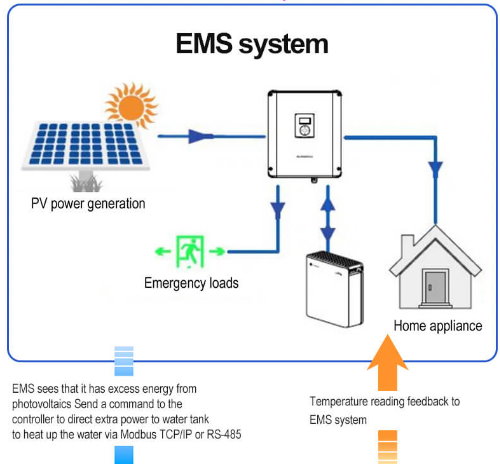
How a Modbus TCP/IP RS-485 temperature controller can fit into a Energy management system(EMS) in solar industrial ?EMS(Energy management system) is the brain of solar system for household, when the solar generates excessive power and that excessive power should be well perserved, one of the approach woud be direct the excessive power to water heater. Here’s how a PID controller fits into and enhances a solar-powered EMS system. Basically when EMS sees extra power, it will give command to Temperature controller via modbus TCP/IP and heat up water. PID-Based Control: EMS → Temperature Setpoint (°C) → PID Controller (as Intelligent Regulator) → Heater The PID controller is no longer just a dumb power valve; it becomes a smart, autonomous agent managing a thermal process, with the EMS acting as a supervisor that optimizes the agent's goals based on solar availability. How the EMS & PID Controller Interact: Key S...
ON/OFF control mode is simplest form of automatic control mode, it's like a switch, either ON or either off. the rules is very simple, in a reverse control situation, when prorcess value is lower then the desirved, the output is fully on, when process value higher than the setting value, fully off. an analogy we often use is like driving the car from starting point to finishing line.In the situation of an ON/OFF control, you apply the full thrust and drive the car to the finishing line, and after the car cross the finishing line, you release the thrust and turn the engine off. the rule is very simple, the downside of this type of control mode is there will be significant overrun at the finishing line, it's impossible to stop on the finishing without overrun, in contrast, the PID control mode, the driver will observe carefully and calculate the distance and speed in relation to the finishing line, and gradually apply less thrust and maybe apply a little brake too to make sure the car st...