Search
  • What is a PID temperature controller ? Jan 21 , 2022
    PID Temperature controller is a device working based on an algorithm where the controller compares the difference between the setting value and process value, based on the difference, the controller will calculate how much power needs to be feeded to the load to keep the process value as close as it can be torwards the setting value, this is a baisc concepts of the temperature controllers.
  • What is PID control and how is it different from ON/OFF control Apr 02 , 2022
    PID control is the mainstream control method that is required in a lot of industrials, like food processing, plastic extrusion, semi-conductors etc. these industrial often need precision control and overshoot should be limited, PID control is also referred to as “Three-term” control. The three terms are: P for ProportionalI for IntegralD for Derivative The output of the controller is the sum of the three factors above, PID control takes different varibles into consideration and calculate an optimized outputs to excecute and dispatch approriate power to the load, therefore controls the process by maintaing the process value as close as it can be to the setting value. ON/OFF control, is a very simple control method, in a reverse control situation, when process value is lower than the setting value, full power will be applied to the load which is ON status, when process value is higher than the setting value, 0% power will be applied and this is OFF status, if you picture a co...
  • How PID controller is used to control temperature ? Aug 10 , 2022
    PID temperature controllers works by adopting P.I.D algorithm and compare the difference between set value and process value, then decide the amount of output should be applied to the load to maintain the process value at or as close as possible to the set value. In a typical field applictaion, a lot of variations contribute to the outcome of the control process.  the PID controller is able to eliminate the impact from the surroundings and be able to adjust the output automatically to acheieve the best outcome. all of Maxwell temperature controller is PID controller, as oppose to PID controller, there are ON/OFF controllers on the market,  PID controller is for system where the tempreature control must be precise and the temperature is indeed critical to the system, like pharmaceutical industry, semi-conductor , some of applications on the other hand is less demanding when it comes to tempreature control precision. ON/OFF controller would be an ideal solution for these applic...
  • Temperature controller with built-in timer for powder coating Oven Feb 10 , 2023
    The powder coating oven requires precise control on both temperature and time, the typical process would be hold the temperature and a set value for a certain period of time, the conventional solution would be using two control device , one is a temperature controller and the other one is a timer. At Maxwell, we have a temperature controller with built-in timer, the temperature can be controlled at a preset value and the timer can be programmed to engaged when temperature reach to set value and holding the temperature at certain period of time, when the time elapsed, the burner will be turned off. our model FT20X is a perfect solution for the oven. when the coating process finished, operator can hear a buzzer goes off to sort of notify the process is finished.
  • How to choose proper SCR power regulator according to your application ?
    How to choose proper SCR power regulator according to your application ? Jul 02 , 2025
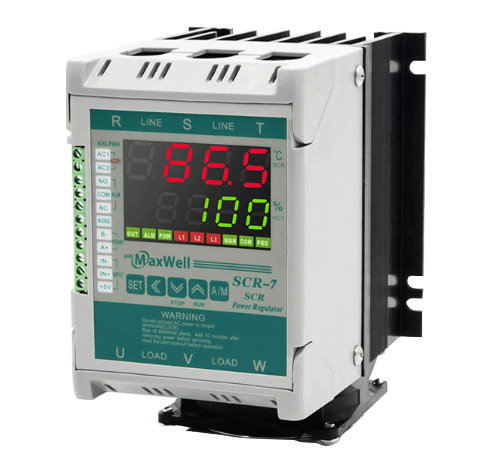
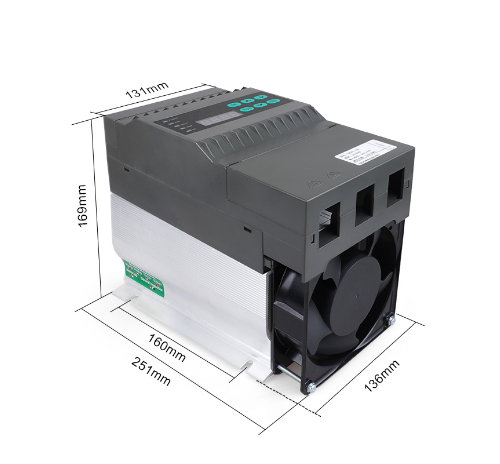
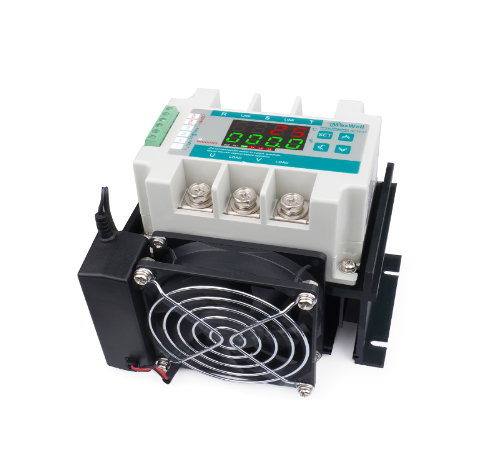
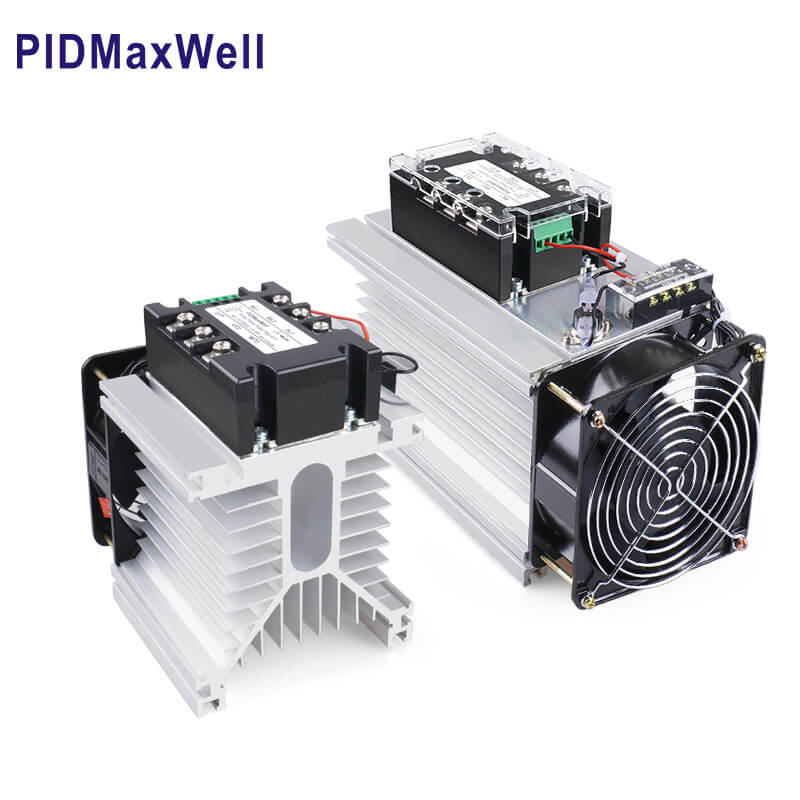
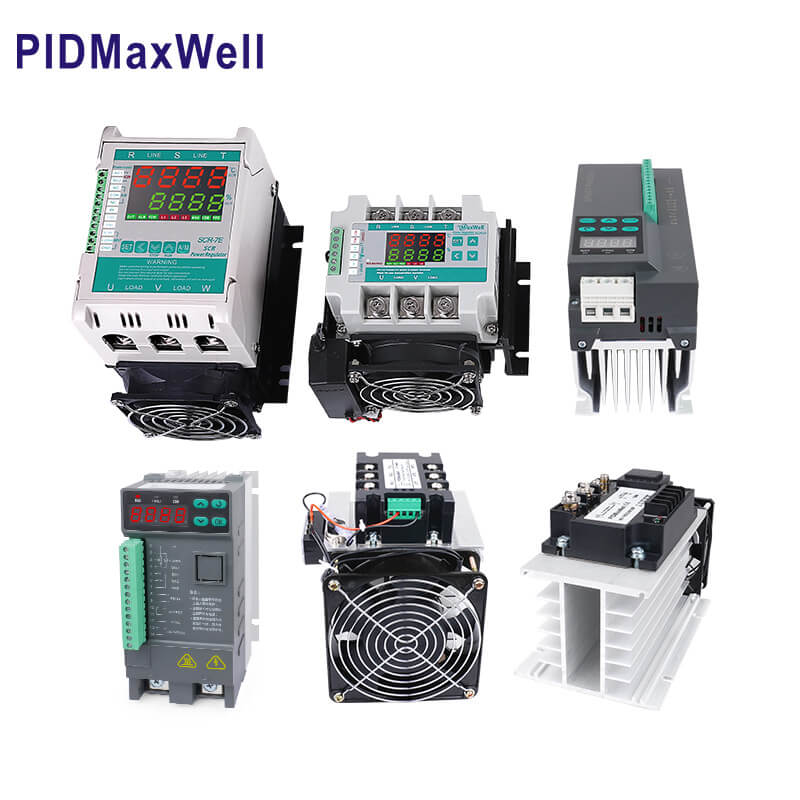
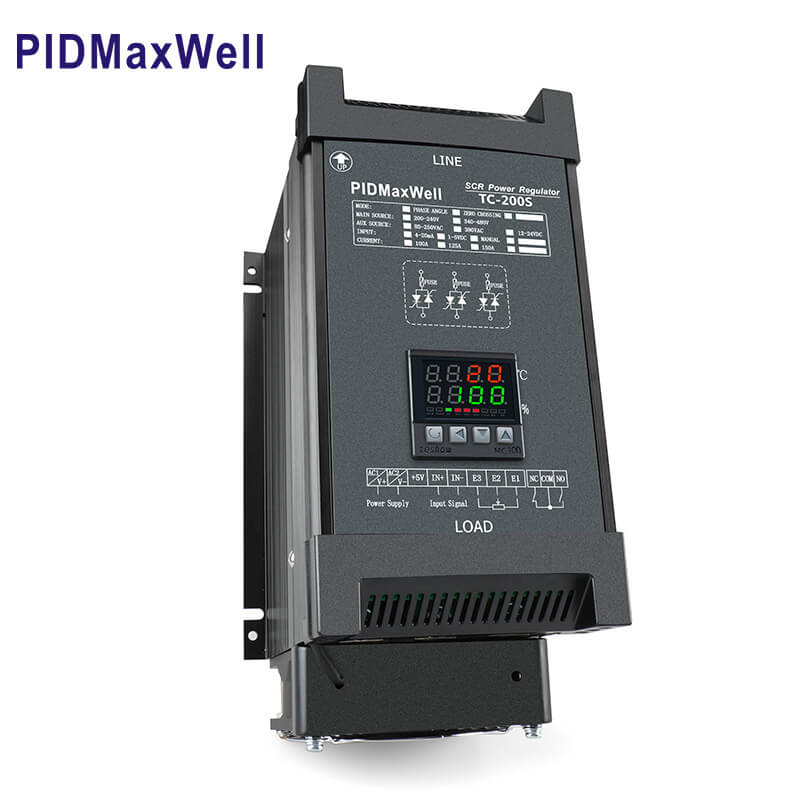
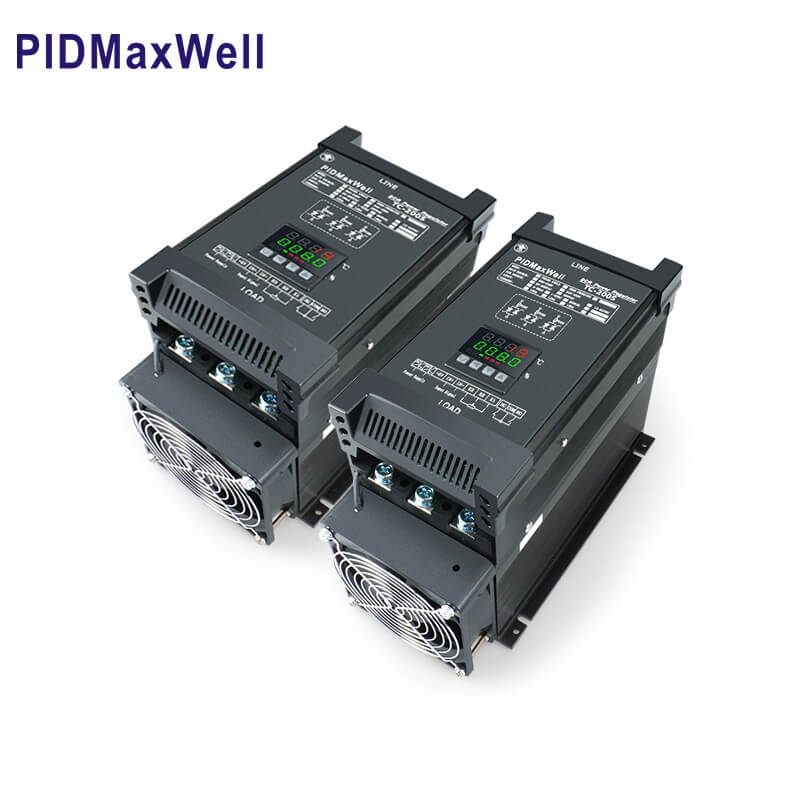
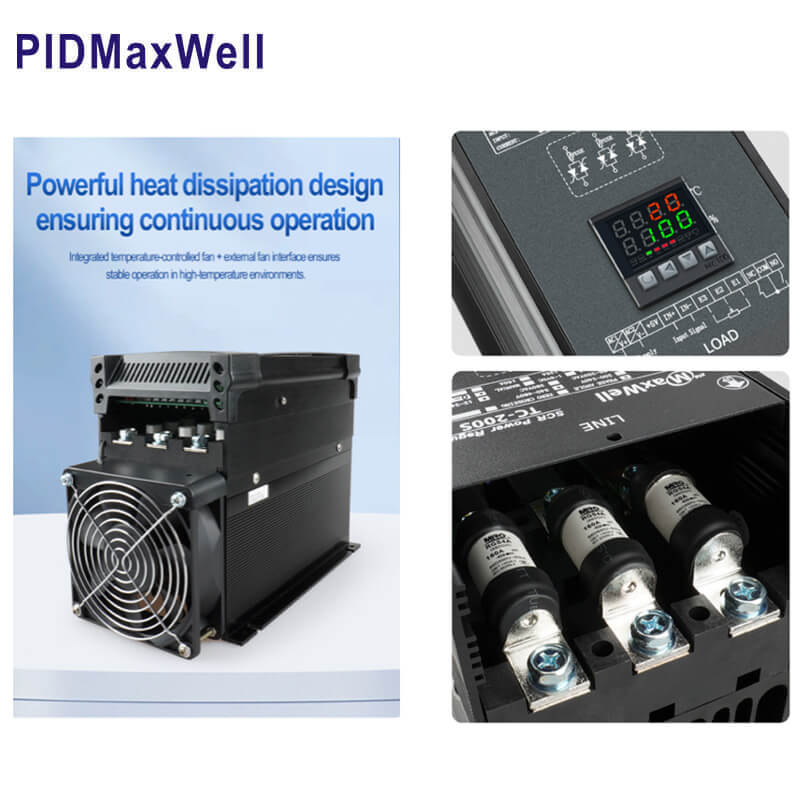
    How to choose proper SCR power regulator according to your application ? SCR power regulator is heavily used in industrial application particularly heating application, to choose proper SCR, several key factors needs to be take into consideration.  1)first thing first, figure out your source whether it is single phase or three phase, the single phase SCR is for single phase source, 3 phase SCR is for 3 phase source, like 3 phase 4 wires, 3 phase 3 wires etc. if the load is single phase, the process is quite simple, make sure you select a SCR with the current rating 2 times higher of the actual load. for example, if you have a heater with 20 amps and 240Vac load, the proper SCR would be 40 amps and 240~480Vac load2)PIDMaxwell SCR power regulator only works for resistive load, make sure your load is resistive load like a heater, electric heater, infrared heater etc3)Identify your source, the source would be 3 phase 380V 4 wires source, like in China, or 3 phase 4 wire 400V in german...
  • Wait function for ramp and soak controller
    Wait function for ramp and soak controller Dec 17 , 2025
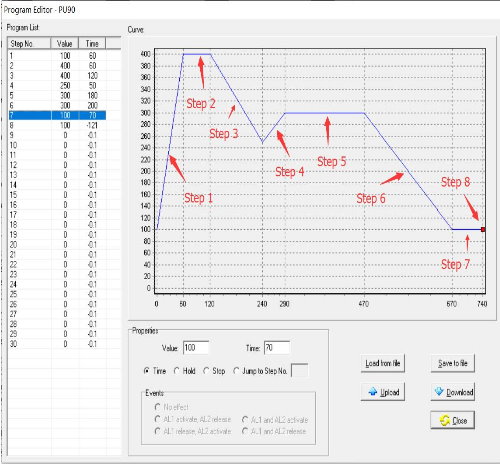
    Ramp and soak controller are heavily used in Kiln industry for various application such as Heat Treatment industrial,Ceramics and Sintering industrial,Glass Manufacturing and Tempering,Chemical and Pharmaceutical Reactors,Semiconductor and Electronics Manufacturing, food processing etc. a perfect controlled ramp up and soak segments is crucial for these process. the process always starts out from ambinent temperature let's say 25 degree, for example , if you have a process like below:From Ambient temperature to set point 200 degree within 20 minutesAnd after temperature reach to 200 degree, the temperature will be held at 200 degree for 60 minutesIn field application, the tempeature can be somewhere high or low than 200 degree when 20 minutes elapsed. when this happens, the controller should not proceed to the soak segment cause the process value is way off the target value 200 degree, to solve this problem , our controller has a Wait function,  the temperature will go up fro...
  • what is ON/OFF control mode in the context of PID temperature controller
    what is ON/OFF control mode in the context of PID temperature controller Dec 24 , 2025
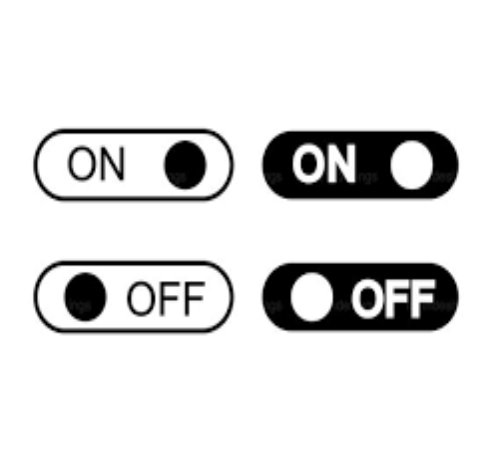
    ON/OFF control mode is simplest form of automatic control mode, it's like a switch, either ON or either off. the rules is very simple, in a reverse control situation, when prorcess value is lower then the desirved, the output is fully on, when process value higher than the setting value, fully off. an analogy we often use is like driving the car from starting point to finishing line.In the situation of an ON/OFF control, you apply the full thrust and drive the car to the finishing line, and after the car cross the finishing line, you release the thrust and turn the engine off. the rule is very simple, the downside of this type of control mode is there will be significant overrun at the finishing line, it's impossible to stop on the finishing without overrun, in contrast, the PID control mode, the driver will observe carefully and calculate the distance and speed in relation to the finishing line, and gradually apply less thrust and maybe apply a little brake too to make sure the car st...
  • Why can't we just look at the kilowatt rating when selecting a three-phase power regulator?
    Why can't we just look at the kilowatt rating when selecting a three-phase power regulator? Jun 18 , 2026
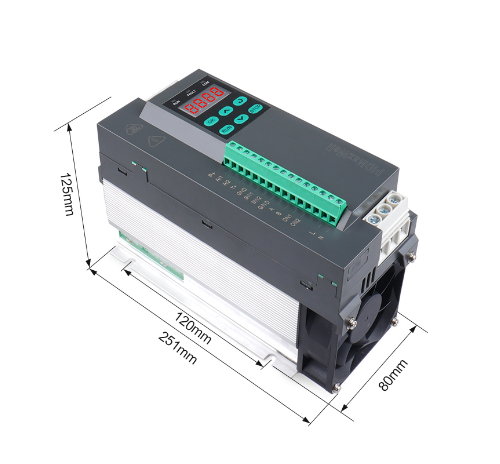
    When selecting a three-phase power regulator, many customers focus first on total power—asking, "What size do I need?" based on the equipment's actual load wattage. While this approach isn't wrong, power rating alone isn't enough; we also need to consider voltage, current per phase, load type, the temperature controller's output signal, and the electrical cabinet's heat dissipation conditions. First, distinguish between single-phase and three-phase systems. Use a single-phase power regulator for 220V single-phase heating elements, but for 380V three-phase heating equipment—such as ovens, electric furnaces, heat treatment furnaces, or drying equipment—we must use a three-phase power regulator. Even if the total power is low, if the load is wired in a three-phase configuration, we cannot simply choose a single-phase unit for convenience; you must calculate the current based on three-phase requirements. The key factor is the current per phase. For instance, with a 380V, ...
  • How can the problem of circuit breakers tripping during the startup of electric furnaces or ovens using silicon carbide or molybdenum disilicide heating elements be resolved?
    How can the problem of circuit breakers tripping during the startup of electric furnaces or ovens using silicon carbide or molybdenum disilicide heating elements be resolved? Jun 18 , 2026
    In the daily operation of industrial heating equipment, almost every field engineer has encountered this scenario: the moment the start button is pressed, the circuit breaker in the power distribution cabinet trips immediately—the equipment "goes on strike" before it even begins to work. This happens frequently, especially when the equipment is starting from a cold state: the ammeter needle swings violently to the maximum, a dull "hum" might be heard from the contactor, and then everything goes dead. Faced with this predicament, many people’s first reaction is to suspect the circuit breaker is undersized, complain about unstable grid voltage, or blame the power regulator itself. However, seasoned veterans will tell you that the real culprit behind these frequent trips often lies in the massive inrush current that occurs the moment startup begins. To understand this phenomenon, one must look at the physical properties of electric heating elements. Whether it is common resist...
  • What are the applications of SCR power regulators ?
    What are the applications of SCR power regulators ? Jun 23 , 2026
    What are the applications of power regulators? Today, Xiamen Maxwell Automation Limited.—a manufacturer of SCR Power Regulator—discusses the wide range of applications and industries where power regulators are used: Power regulators are widely used in the following areas: 1. Electric furnace industry: Annealing furnaces, drying ovens, quenching furnaces, sintering furnaces, crucible furnaces, tunnel kilns, and melting furnaces. 2. Machinery and equipment: Packaging machinery, injection molding machines, heat-shrinking equipment, extrusion machinery, food processing machinery, tempering equipment, plastic processing, and infrared heating. 3. Glass industry: Fiberglass production, glass forming, glass melting, glass printing, float glass production lines, and annealing lehrs. 4. Automotive industry: Paint drying and thermoforming. 5. Energy-efficient lighting: Tunnel lighting, street lighting, photography lighting, and stage lighting. 6. Chemical industry: Distillation and ev...
  • The core of three-phase power regulator selection: How to choose between phase-shifting voltage regulation and zero-crossing power regulation?
    The core of three-phase power regulator selection: How to choose between phase-shifting voltage regulation and zero-crossing power regulation? Jun 30 , 2026
    In industrial heating systems, three-phase power regulators have become the mainstay of power control. However, when faced with the selection process, many engineers still struggle with the question: should they use phase-shifting voltage regulation or zero-crossing power regulation? Choosing the wrong option can lead to unstable temperature control at best, and at worst, affect the lifespan of the power grid and equipment. In fact, understanding the underlying differences between the two technologies clarifies the answer.     Phase angle firing mode Essentially, it's about "waveform cutting." A portion of the conduction angle is cut off within each half-cycle, resulting in a continuously adjustable output voltage. The advantages are extremely fast response and precise control, making it suitable for applications requiring rapid response. The trade-off is waveform distortion, which generates harmonics and causes some pollution to the power grid. Burst firing mode This is call...

Leave A Message

Leave A Message
If you are interested in our products and want to know more details,please leave a message here,we will reply you as soon as we can.

Home

Products

contact

whatsapp