Search
  • What is a PID temperature controller ? Jan 21 , 2022
    PID Temperature controller is a device working based on an algorithm where the controller compares the difference between the setting value and process value, based on the difference, the controller will calculate how much power needs to be feeded to the load to keep the process value as close as it can be torwards the setting value, this is a baisc concepts of the temperature controllers.
  • What is PID control and how is it different from ON/OFF control Apr 02 , 2022
    PID control is the mainstream control method that is required in a lot of industrials, like food processing, plastic extrusion, semi-conductors etc. these industrial often need precision control and overshoot should be limited, PID control is also referred to as “Three-term” control. The three terms are: P for ProportionalI for IntegralD for Derivative The output of the controller is the sum of the three factors above, PID control takes different varibles into consideration and calculate an optimized outputs to excecute and dispatch approriate power to the load, therefore controls the process by maintaing the process value as close as it can be to the setting value. ON/OFF control, is a very simple control method, in a reverse control situation, when process value is lower than the setting value, full power will be applied to the load which is ON status, when process value is higher than the setting value, 0% power will be applied and this is OFF status, if you picture a co...
  • Head mount temperature transmitter Jun 21 , 2022
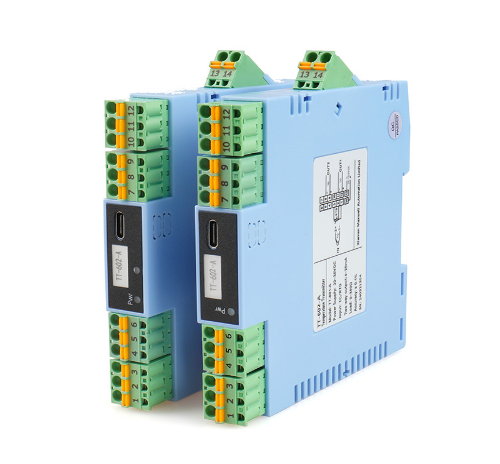
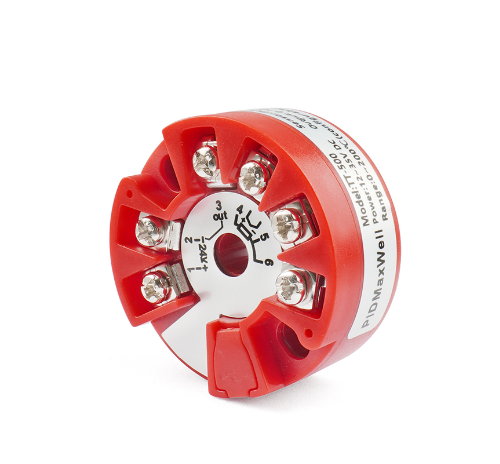
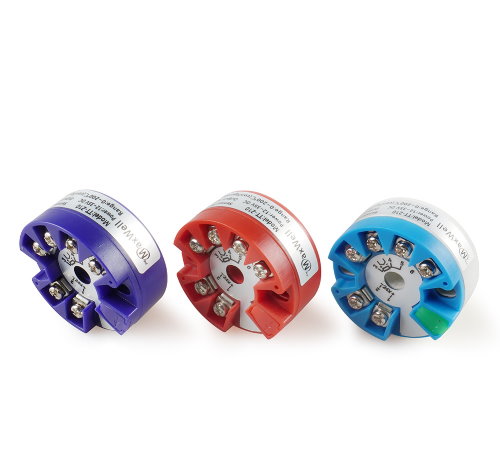
    The temperature transmitter is a device which converts various temperature signals into analog signals like 4-20mA, 0-10VDC,  Temperature transmitters are available in all different shapes and sizes, depending on the application and environment they are expected to operate. To name a few, they are DIN rail mounted temperature transmitters, also known as Rail temperature transmitters,  field mounted temprature transmitters, Hockey puck temperature transmitters.       Here at Maxwell, we offer all types of temperature transmitters, the most popular one would be standard version without isolation and some smart temperature transmitters like HART protocol temperature transmitter, RS-485 modbus Temperature transmitters.
  • How do we carry out the calibration on head mount temperature transmitter ?
    How do we carry out the calibration on head mount temperature transmitter ? Jul 01 , 2022
    The accuracy of a temperature transmitter is THE key aspects to look into, as with many instrumentation transmitter, a temperature transmitter needs to be adjusted or calibrated. So the current output of 4-20mA represents the temperature range of the process variable being measured, for example, a process variable temperature range of zero degree Celsius to 100 degree Celsius will produce a current range of 4 to 20 mA.In every calibration scenario, a sensor is replaced by a device that can simulate the output of the sensor over the entire process variable temperature range.  For a thermocouple, the sensor is replaced by a device that produces a range of millivolts. For an RTD sensors, the sensor is replaced by a device that produces a range of resistances. Devices produces resistances such as decade box,  today ,we’ve got signal reference calibrators to generate various reference signals for RTD and thermocouples which makes the calibration for temperature transmitters ...
  • How do you choose a temperature transmitter
    How do you choose a temperature transmitter Jul 07 , 2022
    Selecting correct temperature transmitters could be quite challenging from time to time, there are a lot of factors needs to be take into consideration, but first and foremost is to make sure that the measurement accuracy and to convert a temperature sensor’s low-level (ohm or mV) signal to a standard 4-20mA current signal that can be readily accepted by a monitoring and control system, such as a DCS or PLC The evolving technology has made the temperature transmitter reliable, affordable,  below are the few things should be taken into consideration when choose the correct temperature transmitter. 1. Back of Panel or Local Installation Perhaps the most important consideration when specifying a temperature transmitter is the environment in which it will be installed. If the distance between the sensor measurement and the control room is relatively short and free of plant electrical "noise", temperature transmitters can be inexpensively installed in the control room, with senso...
  • How PID controller is used to control temperature ? Aug 10 , 2022
    PID temperature controllers works by adopting P.I.D algorithm and compare the difference between set value and process value, then decide the amount of output should be applied to the load to maintain the process value at or as close as possible to the set value. In a typical field applictaion, a lot of variations contribute to the outcome of the control process.  the PID controller is able to eliminate the impact from the surroundings and be able to adjust the output automatically to acheieve the best outcome. all of Maxwell temperature controller is PID controller, as oppose to PID controller, there are ON/OFF controllers on the market,  PID controller is for system where the tempreature control must be precise and the temperature is indeed critical to the system, like pharmaceutical industry, semi-conductor , some of applications on the other hand is less demanding when it comes to tempreature control precision. ON/OFF controller would be an ideal solution for these applic...
  • Temperature controller with built-in timer for powder coating Oven Feb 10 , 2023
    The powder coating oven requires precise control on both temperature and time, the typical process would be hold the temperature and a set value for a certain period of time, the conventional solution would be using two control device , one is a temperature controller and the other one is a timer. At Maxwell, we have a temperature controller with built-in timer, the temperature can be controlled at a preset value and the timer can be programmed to engaged when temperature reach to set value and holding the temperature at certain period of time, when the time elapsed, the burner will be turned off. our model FT20X is a perfect solution for the oven. when the coating process finished, operator can hear a buzzer goes off to sort of notify the process is finished.
  • A Deep Dive into Kiln Controllers Dec 26 , 2023
    A Deep Dive into Kiln Controllers Introduction We are a PID temperature controller supplier in China, one of our kiln controller rolled out early of 2023 is very popular on the market and we are the first factory to introduce this kind of controller in China. Today we are going to dig deep into kiln controllers and beyond In the world of ceramics, pottery, and even certain industrial processes, the kiln plays a pivotal role in transforming raw materials into beautifully crafted and durable products. The key to achieving consistent and precise results lies in the heart of the kiln – its controller. In this blog, we'll explore the significance of kiln controllers, their functionalities, and how they contribute to achieving the perfect firing process. Understanding Kiln Controllers   A kiln controller is essentially the brain of the kiln. It is a sophisticated device designed to regulate the temperature, humidity, and other crucial factors during the firing process. Whether you...
  • What is HART 7?
    What is HART 7? Mar 23 , 2024
    HART 7 is more than just a wireless protocol, our HART protocol temperature transmtiter TT-217 is HART 7 product, you can configure it by using our PC software or you can configure it by using standard HART communicator, the HART 7 standard applies to the full range of measurement, control, and automation systems products based on the HART Communication Protocol – whether wired or wireless. The WirelessHART capability is getting the most attention, but HART 7 provides many new capabilities beneficial to industry users in both wired and wireless products. Examples include: 1) Report by Exception—enables devices to push information to the control or asset management system without the system having to poll the device with a standard HART command. If there is a process or device status change, the device will automatically advise you.2) Time-Stamped Data—a valuable tool that adds a time stamp to process data readings sent to the host system which is helpful in evaluating...
  • What is a Head-Mount Temperature Transmitter? key advantages and why you should use one
    What is a Head-Mount Temperature Transmitter? key advantages and why you should use one Nov 10 , 2025
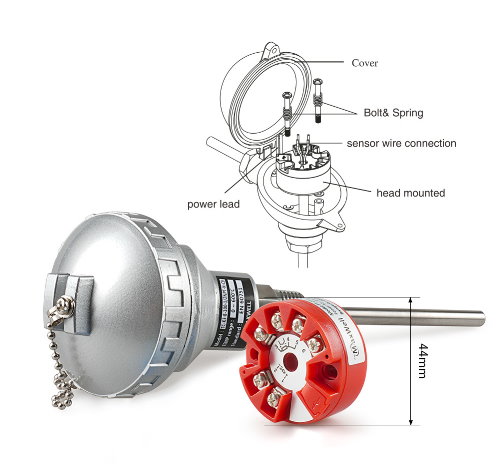
    Head-mount temperature transmitter is a device installed directly in the connection head of a temperature sensors, temperature sensor typically will be thermocouple or RTDs, the key feature of temperature transmitter is to convert small and raw signal from the sensor into analog signal like 4-20mA, the transmitter has various options such as isolated type,  Hart version,  Modbus RS-485 compatible version, below is an image on how it looks like and the way it is installed inside the connection head In many applications, the master device which receive the temperature signal often located at central control room or far away from the filed where the sensor installed, if the extension cable had been used, the signal will be affected by electrial noise and signal will suffer significant attenuation over long cable runs, therefore , by converting the weak signal into 4-20mA or other digital signal will minimizes the negative effects and saves cost too. as the extension cable is muc...
  • How to Choose suitable temperature transmitter for your application ?
    How to Choose suitable temperature transmitter for your application ? Nov 13 , 2025
    Below are some of key factor you shall consider while choosing a correct transmitter for your application 1)The input of the transmitter, if you are end user and looking for a cost down version solution, you might want go with the transmitter with a fixed input such as type K thermocouple or PT100, in this case, we as factory can preset the input and range of you, the transmitter will be installed right way after you get it from us, no extra programming is needed, saves time and efforts for you.  If you are stockiest looking to build up some stocks in your disposal, then our universal input transmitter is an ideal choose. Transmitter compatible with both TC and RTd input, and programmable via PC and android device.   2)Output is another key factor to consider, in many cases, 4-20mA output will be the choice for output, but some of customer will need 0-10VDC output too, we can offer both, our TT-210 is 4-20mA output version, and TT-500 is 0-10Vdc output version   3)Some o...
  • Wait function for ramp and soak controller
    Wait function for ramp and soak controller Dec 17 , 2025
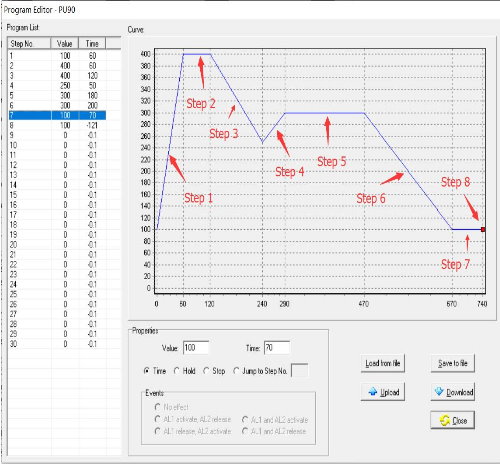
    Ramp and soak controller are heavily used in Kiln industry for various application such as Heat Treatment industrial,Ceramics and Sintering industrial,Glass Manufacturing and Tempering,Chemical and Pharmaceutical Reactors,Semiconductor and Electronics Manufacturing, food processing etc. a perfect controlled ramp up and soak segments is crucial for these process. the process always starts out from ambinent temperature let's say 25 degree, for example , if you have a process like below:From Ambient temperature to set point 200 degree within 20 minutesAnd after temperature reach to 200 degree, the temperature will be held at 200 degree for 60 minutesIn field application, the tempeature can be somewhere high or low than 200 degree when 20 minutes elapsed. when this happens, the controller should not proceed to the soak segment cause the process value is way off the target value 200 degree, to solve this problem , our controller has a Wait function,  the temperature will go up fro...
  • How a Modbus TCP/IP RS-485 temperature controller can fit into a Energy management system(EMS) in solar industrial ?
    How a Modbus TCP/IP RS-485 temperature controller can fit into a Energy management system(EMS) in solar industrial ? Jan 05 , 2026
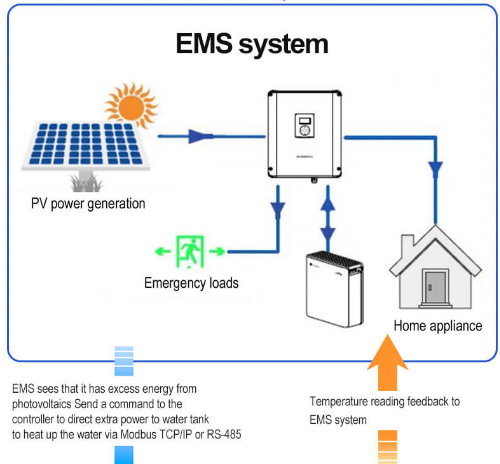
    How a Modbus TCP/IP RS-485 temperature controller can fit into a Energy management system(EMS) in solar industrial ?EMS(Energy management system) is the brain of solar system for household, when the solar generates excessive power and that excessive power should be well perserved,  one of the approach woud be direct the excessive power to water heater. Here’s how a PID controller fits into and enhances a solar-powered EMS system. Basically when EMS sees extra power,  it will give command to Temperature controller via modbus TCP/IP and heat up water. PID-Based Control: EMS → Temperature Setpoint (°C) → PID Controller (as Intelligent Regulator) → Heater The PID controller is no longer just a dumb power valve; it becomes a smart, autonomous agent managing a thermal process, with the EMS acting as a supervisor that optimizes the agent's goals based on solar availability.   How the EMS & PID Controller Interact: Key S...
  • How can a power regulator stabilize the temperature from fluctuating highs and lows to a stable online position?
    How can a power regulator stabilize the temperature from fluctuating highs and lows to a stable online position? Jul 15 , 2026
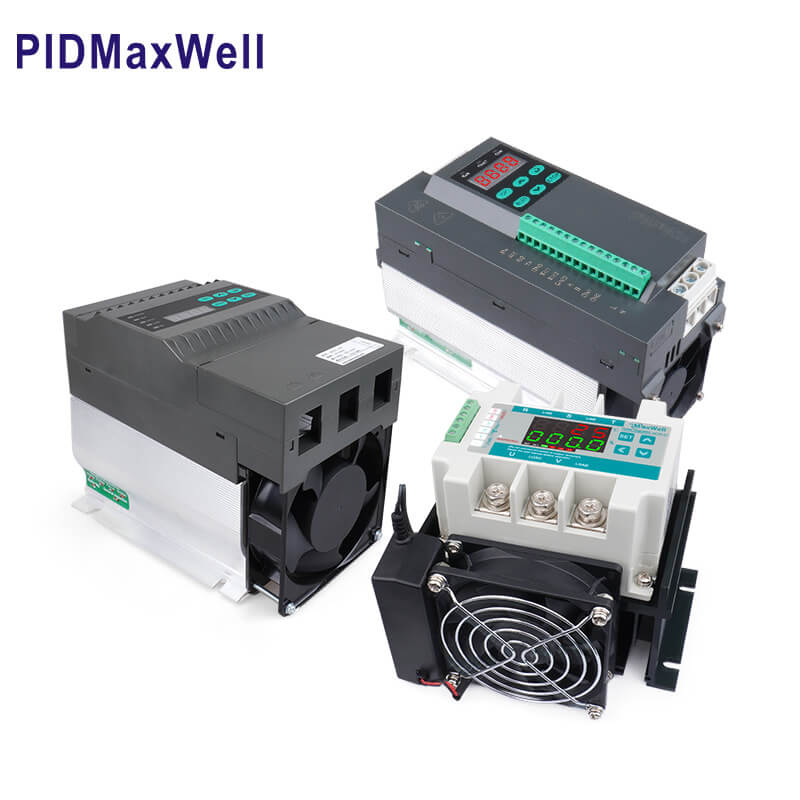
      Many customers, when first encountering electric heating control, intuitively think: heating is simply about turning on the power when the temperature is low and turning it off when the temperature is high. This "on-off" approach might work for small household appliances, but once you switch to industrial ovens, electric furnaces, thermoforming equipment, or heat treatment production lines, you'll quickly find that the temperature fluctuates wildly, like a rollercoaster, and product quality becomes inconsistent.   In reality, truly worry-free and stable heating control is never simply about "on-off." It's more like a "precise calculation" of heat: providing more when needed, less when needed, and maintaining a stable level when necessary. The core component that helps you achieve this "precise calculation" is the power regulator.   Imagine boiling water on a gas stove—if you can only turn the flame on full blast or turn it off completely, the water will either bo...
  • Power Regulator Selection Tips
    Power Regulator Selection Tips Jul 15 , 2026
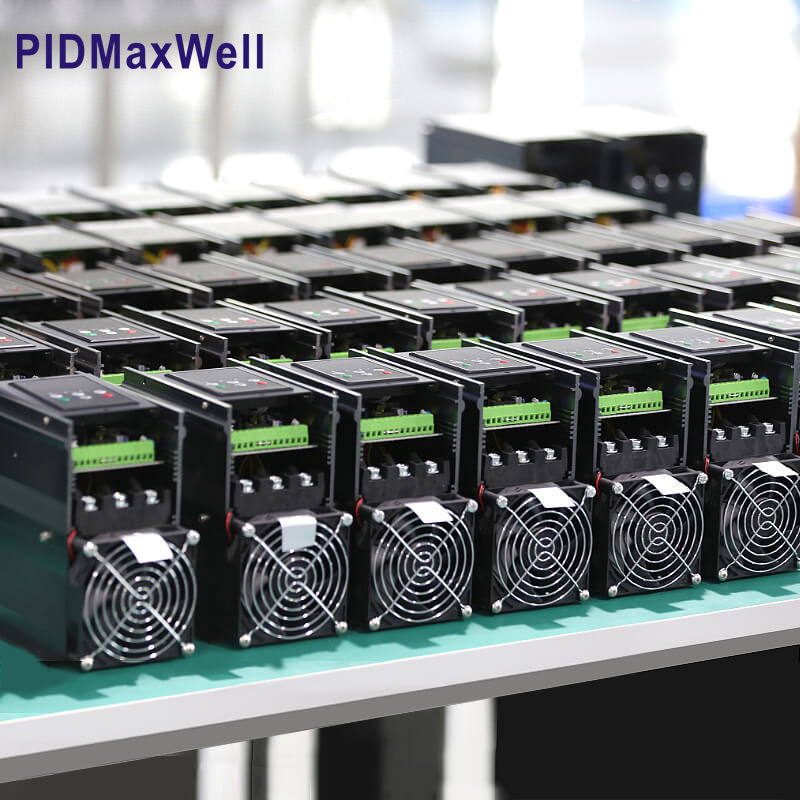
    Power regulators (also known as power control units) are key actuators in industrial electric heating control, their core function being to regulate output power. However, many users easily overlook the fact that power regulators offer more than one power regulation method. Different heating loads have varying electrical characteristics and diverse process requirements, necessitating different control methods. Common power regulation methods on the market mainly fall into four categories: phase control (phase shift control), zero-crossing control (zero-position control/cycle control), voltage regulation control, and power regulation control. Understanding these basic principles will help avoid pitfalls in power selection.   Why does the power regulation method affect power selection? The role of a power regulator is to precisely control output power, but different loads have drastically different requirements for the output method. Ordinary heating elements and resistance wires ha...

Leave A Message

Leave A Message
If you are interested in our products and want to know more details,please leave a message here,we will reply you as soon as we can.

Home

Products

contact

whatsapp