-
Tel : +86-592-6382791
-
Email : sales@pidmaxwell.com
Tel : +86-592-6382791
Email : sales@pidmaxwell.com


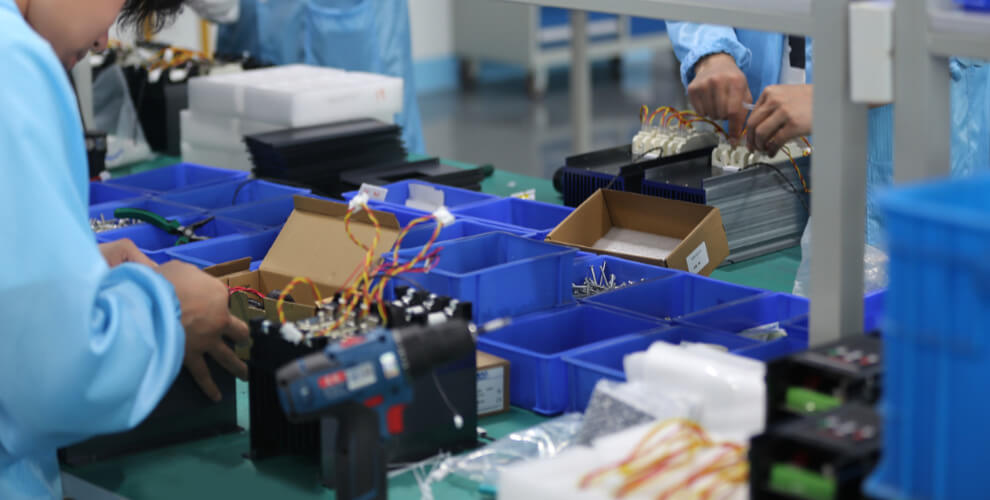
The core heating element of an industrial oven is typically an electric heating element. Once heat is generated, a circulating fan distributes the hot air throughout the oven.
The long-term stable operation of an oven depends not only on its insulation structure, airflow design, fan performance, and temperature control instruments, but also closely on the method of adjusting the heating power.
The core value of the PIDMaxWell power regulator in the oven heating process lies in its ability to flexibly adjust the output power of the heating element based on real-time temperature control requirements, resulting in a smoother and more controllable heating curve and temperature maintenance process.
I. Why can't the heating power of an oven remain constant?
In actual operation, the heat demand of an oven varies greatly at different times:
During the initial cold start, the oven body, air ducts, and workpieces are all at room temperature, requiring a higher power supply to quickly raise the temperature;
When the measured temperature approaches the target value, continuing to heat at full load can easily cause the temperature to spike due to thermal inertia;
Once the oven enters the constant temperature phase, only heat loss due to heat dissipation from the outer shell, door opening and closing, and airflow circulation needs to be compensated, and continuous full power output is not required.
Therefore, the heating control of an oven cannot simply rely on "on/off" logic, but must be precisely adjusted to "the magnitude of the power output."
II. How does the PIDMaxWell power regulator achieve precise intervention in the heating process?
Ovens typically contain thermocouples or resistance temperature detectors (RTDs) as temperature sensing elements. The temperature controller compares the measured temperature with the set value and then outputs an adjustment command.
Upon receiving this command, the PIDMaxWell power regulator dynamically adjusts the supply voltage or current to the heating element, thereby achieving continuous power variation.
Its operating logic can be summarized as follows:
Low temperature stage: Increase output to accelerate heating;
Approaching the target temperature: Gradually reduce output to alleviate thermal inertia;
Constant temperature maintenance stage: Adaptively compensate with a small amount of power based on real-time heat loss.
This control method effectively avoids the heating element repeatedly and drastically switching between "fully on" and "fully off".
III. Helps Suppress Temperature Overshoot
Many oven users have encountered similar problems: The set temperature is 150℃, but after heating stops, the oven temperature continues to rise before dropping.
This is because a large amount of residual heat accumulates in the heating elements, air ducts, and oven walls. Even after the power is cut off, this residual heat continues to be released into the oven.
If a contactor is used for on-off full-power heating, cutting off the power only when the temperature approaches the set value, overshoot is almost inevitable.
However, when the PIDMaxWell power regulator is used in conjunction with a temperature controller that has PID calculation capabilities, it can proactively reduce power early when the temperature approaches the target value, effectively reducing the overshoot caused by residual heat.
IV. Enhancing Batch-to-Batch Production Consistency
In processes such as drying, curing, preheating, and heat treatment, there are often strict windows for heating rates, holding temperatures, and holding times.
If each batch of products experiences different temperature change trajectories, it can easily lead to numerous quality problems:
* Differences in product surface color;
* Inconsistent drying levels;
* Unstable curing and cross-linking degrees;
* Fluctuations in dimensions or physical properties;
* Different results obtained with the same process parameters.
While the PIDMaxWell power regulator cannot eliminate all temperature difference risks on its own, it makes the adjustment of heating output more linear and controllable.
Combined with reasonable airflow organization, appropriate air volume, accurate temperature measurement points, and comprehensive PID parameter tuning, the uniformity between batch products can be significantly improved.
V. Reducing Frequent Contactor Wear
During the heat preservation stage, in traditional solutions, contactors repeatedly engage and disengage due to temperature fluctuations.
Prolonged high-frequency operation brings several drawbacks: Increased contact wear; Excessive contactor body temperature rise; Continuous engagement noise; Loosening or even burning of terminals; Increased maintenance frequency and cost.
The PIDMaxWell power regulator uses semiconductor power devices for contactless power regulation. The main heating circuit no longer relies on frequent on/off switching of mechanical contactors, making it particularly suitable for ovens requiring long-term constant temperature operation.
VI. What details should be considered when selecting a power regulator for an oven?
Before selecting a PIDMaxWell power regulator for an oven, the following parameters and conditions should be confirmed one by one:
Power supply voltage level;
Single-phase or three-phase input;
Total heating power and rated power of each heating element;
Star/delta wiring configuration of the heating elements;
Type of control signal output from the temperature controller (e.g., 4-20mA, 0-10V);
Whether independent temperature control is required for each zone;
The internal heat dissipation conditions and installation dimensional margin of the control cabinet.
If the oven is divided into upper zone, lower zone, or multiple independent temperature zones, it is recommended to configure a separate temperature sensing element and an independent power adjustment circuit for each temperature zone. It is not advisable to drive all heating tubes with a single temperature sensing point.
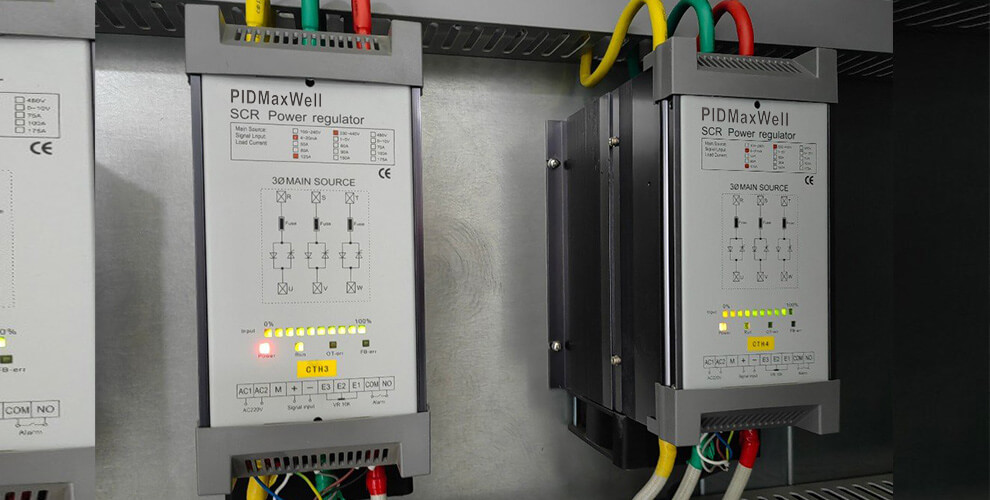
The core function of the PIDMaxWell power regulator in industrial ovens is to continuously and precisely adjust the output power of the heating elements, ensuring that the heating power during the initial heating phase, transition phase, and constant temperature phase more closely matches the actual heat demand.
It helps suppress temperature overshoot, reduces contactor operation frequency, and improves the overall response quality of the heating process.
If your existing oven experiences large temperature fluctuations, constant temperature drift, frequent contactor switching, or inconsistent performance between different batches, it is recommended to first review the equipment's historical temperature curves and output records before assessing whether to install or replace the power regulator. This is often a direct and effective step in improving temperature control performance.

Address : NO.201 Binhuyili, HaiCang district, XiaMen,FuJian, China 361026
Max liao: +8618150368619(whatsapp)
Email : sales@pidmaxwell.com
Scan via wechat

Scan to Whatsapp